Kyajo Ri Peak Climbing

9 reviews in TripAdvisor
16 reviews in Google Reviews
Duration
25 Days
Trip Grade
Strenuous
Country
Nepal
Maximum Altitude
6,186m
Group Size
1/12pax
Starts
Kathmandu
Ends
Kathmandu
Activities
Peak Climbing in Nepal
Best Time
March-May & September-November

Overview

Kyajo Ri Peak Climbing offers a unique opportunity to ascend one of Nepal’s least-climbed 6,000-meter trekking peaks. Standing at 6,186m (20,296ft) between the Thame Valley and Gokyo Valley, Kyajo Ri is a semi-technical peak that delivers a true expedition-style climbing experience.

Opened for climbing in 2002 and first summited by a Franco-British team, Kyajo Ri remains far less crowded than neighboring peaks. Its isolation, technical variety, and dramatic setting make it ideal for climbers seeking a challenging yet rewarding ascent.

Our itinerary is carefully designed to maximize summit success through proper acclimatization. Before the climb, you will trek through iconic Himalayan landscapes, including Everest Base Camp, Gokyo Lakes, an ascent of Gokyo Ri (5,357m), and a crossing of the Renjo La Pass (5,340m). This gradual ascent helps prepare your body for high-altitude climbing while offering some of the best scenery in the Khumbu region.

The approach to Kyajo Ri Base Camp takes you off the main trekking routes, passing through Dole, Machhermo, Gokyo Valley, Thame, and Mende—providing a quieter and more authentic Himalayan experience.

Kyajo Ri Peak Climbing Highlights

  • Build mental toughness and resilience that extend far beyond the climb
  • Summit Kyajo Ri Peak (6,186m) and enjoy breathtaking Himalayan panoramas
  • Witness stunning views of Everest, Lhotse, Makalu, and surrounding giants
  • Spot rare Himalayan wildlife such as tahr, musk deer, and snow leopards
  • Experience authentic Sherpa culture through monastery visits and village interactions
  • Take on a rewarding physical challenge across steep, high-altitude, rocky terrain
  • Enjoy a mix of teahouse stays and expedition-style camping
  • Traverse frozen crevasses and exposed trails for a true alpine adventure

Kyajo Ri Climbing Route

The standard climbing route follows the south face, which presents fewer objective hazards such as avalanches or rockfall compared to other routes. The ascent involves a combination of rock, snow, and ice climbing, with several steep and technical sections.

Kyajo Ri is often compared to Ama Dablam due to its mixed climbing nature and dramatic ridgelines.

Camps Overview

  • Base Camp: Final preparation and gear checks
  • Camp I (5,350m): Reached via a long but non-technical trek over rough terrain
  • Camp II (5,700m): Accessed via scree and boulder fields
  • From Camp II, the summit push includes 12 pitches of snow and ice climbing, with two steep sections reaching gradients of up to 60% just below the summit.

Safety & Flexibility

Your safety is our top priority. The expedition leader has full authority to modify or cancel any part of the itinerary if necessary due to weather conditions, health concerns, or other unforeseen circumstances. While we aim to follow the planned schedule, flexibility is essential when traveling in remote mountain regions.

What kind of Gear and Equipment that i need for Kyajo Ri Peak Climbing?

Trekking Gear

  • Trekking shoes (Full)
  • Snow Gaiter
  • Slippers/Flip flops to wear at camp
  • Daypack 30-35 litres
  • Thermarest or similar sleeping mat
  • Headlamps with extra batteries
  • Sunglasses with UV protection
  • A pair of trekking poles
  • Water bottle one (1) litre
  • Laundry bag to keep the dirty clothes
  • Large plastic bags to keep the clothes dry
  • Binoculars

Clothing

  • Long-sleeved shirts
  • T-Shirts
  • Trousers
  • Warm Jackets/Sweater/Pullover
  • Waterproof jackets and trousers
  • Thermal
  • Inner wears
  • Undergarments
  • Warm socks
  • Warm Hat, Gloves (Down) and Bandana/Scarf
  • Extra clothes to wear in Kathmandu when you come back from the trek

Climbing Gear

  • Plastic mountaineering boots
  • Mountaineering/Climbing Harness
  • Helmet
  • Ice Axe
  • Crampons
  • Ascender/Jumar
  • Descender/ 8 figure (Rappelling device)
  • Screw gate Karabiners (Lock 2/Unlock 2)
  • Prusik loop

Medicines (Basic First Aid Kit)

  • Basic first aid kit

Travel Document & Other Essentials

  • Passport with visa and validity of 6 months after your trip completion
  • 4 copies of passport size photos for permits and official formalities
  • Travel Insurance (Please refer to the general information page for more detail about it)
  • Flight tickets
  • Credit cards in case of emergencies
  • Driving ID or any other ID in case of loss of your passport.
  • (Please carry the photocopy of all the documents along with you and leave a copy to next of kin)
  • Camera with charger or spare batteries
  • Padlock
  • Reading materials, notebooks and pens
  • Quick-drying towel
  • Small face towel
  • Toothbrush &Toothpaste
  • Deodorants, Soap and Shampoo (Smaller bottle)
  • Face and body moisturizer, Sunscreen and lip balm
  • Hand sanitizer/Antiseptic wipes
  • Hygiene products

Kyajo Ri Peak Climbing Itinerary

Kathmandu to KathmanduExpand all
Max Altitude: 1,337m Meals: BreakfastAccommodation: Hotel 🏩

Upon arrival at Tribhuvan International Airport, Kathmandu, complete your visa formalities and collect your luggage. After exiting the arrival hall, you will be greeted by our representative, who will be waiting just outside with a signboard.

You will then be transferred to your designated hotel in Kathmandu. Our staff will assist you with check-in and ensure you are comfortably settled. The remainder of the day is free for rest and recovery after your journey, allowing you to prepare for the adventure ahead.

Max Altitude: 1,337m Meals: BreakfastAccommodation: Hotel 🏩

After your first night in Kathmandu, you will be informed of the schedule for your guided sightseeing tour. The tour includes visits to the sacred Pashupatinath Temple and the iconic Boudhanath Stupa, offering a meaningful introduction to Nepal’s cultural and spiritual heritage.

Depending on your flight arrival time, the tour will take place either in the morning or afternoon. If you arrived late the previous night, the tour will be scheduled later in the day to allow sufficient rest and recovery from jet lag.

In the evening, you will attend a detailed briefing with your trek and climbing leader, who will explain the trekking and climbing program, safety procedures, and logistics. This time can also be used to check and arrange any missing trekking or climbing equipment in Kathmandu.

Max Altitude: 2,600m Meals: Breakfast, Lunch, & DinnerAccommodation: Hotel 🏩

Early in the morning, you will be transferred to Tribhuvan International Airport for a scenic 30-minute flight to Tenzing–Hillary Airport, Lukla. The flight offers spectacular views of the Himalayan landscape, including snow-capped peaks and deep valleys.

Upon arrival in Lukla, you will meet the trekking crew and enjoy breakfast at a local lodge. Once the porters organize and load the luggage, the trek officially begins. The trail follows a stone-paved path, passing Mani walls and traditional villages, with pleasant views of Lukla and the surrounding countryside.

Max Altitude: 3,450m Meals: Breakfast, Lunch, & DinnerAccommodation: Hotel 🏩

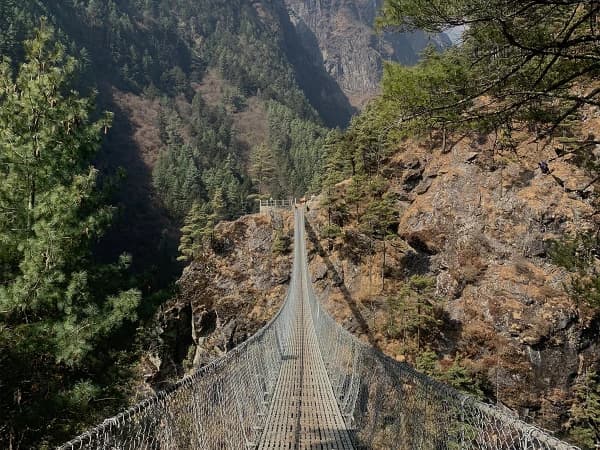
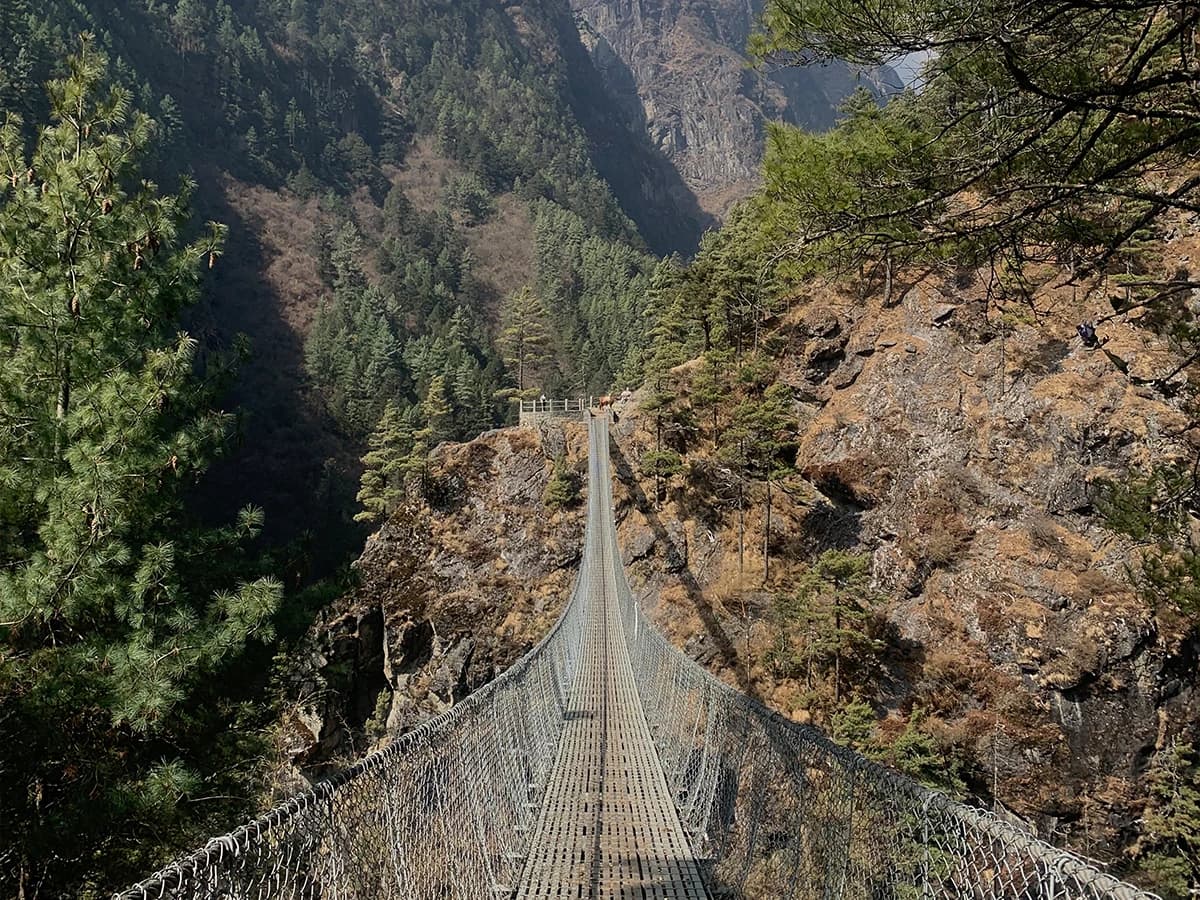
Today, the trek continues along the Dudh Koshi River, winding through beautiful pine forests and crossing several suspension bridges along the way. The trail passes through small Sherpa settlements, including Zapute, Toktok, Benkar, and Chumoa, offering glimpses of local life in the Khumbu region.

You will reach Monjo, the official entrance to Sagarmatha National Park, where permits are checked. After descending briefly from the park entrance, the trail crosses the river once more before continuing toward the impressive Hillary Suspension Bridge, located at the base of a steep hill.

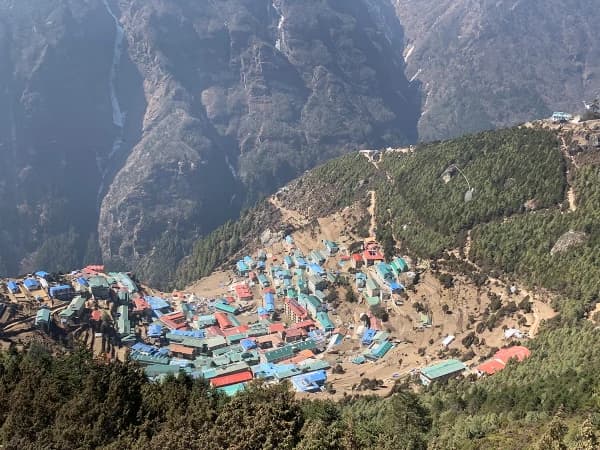
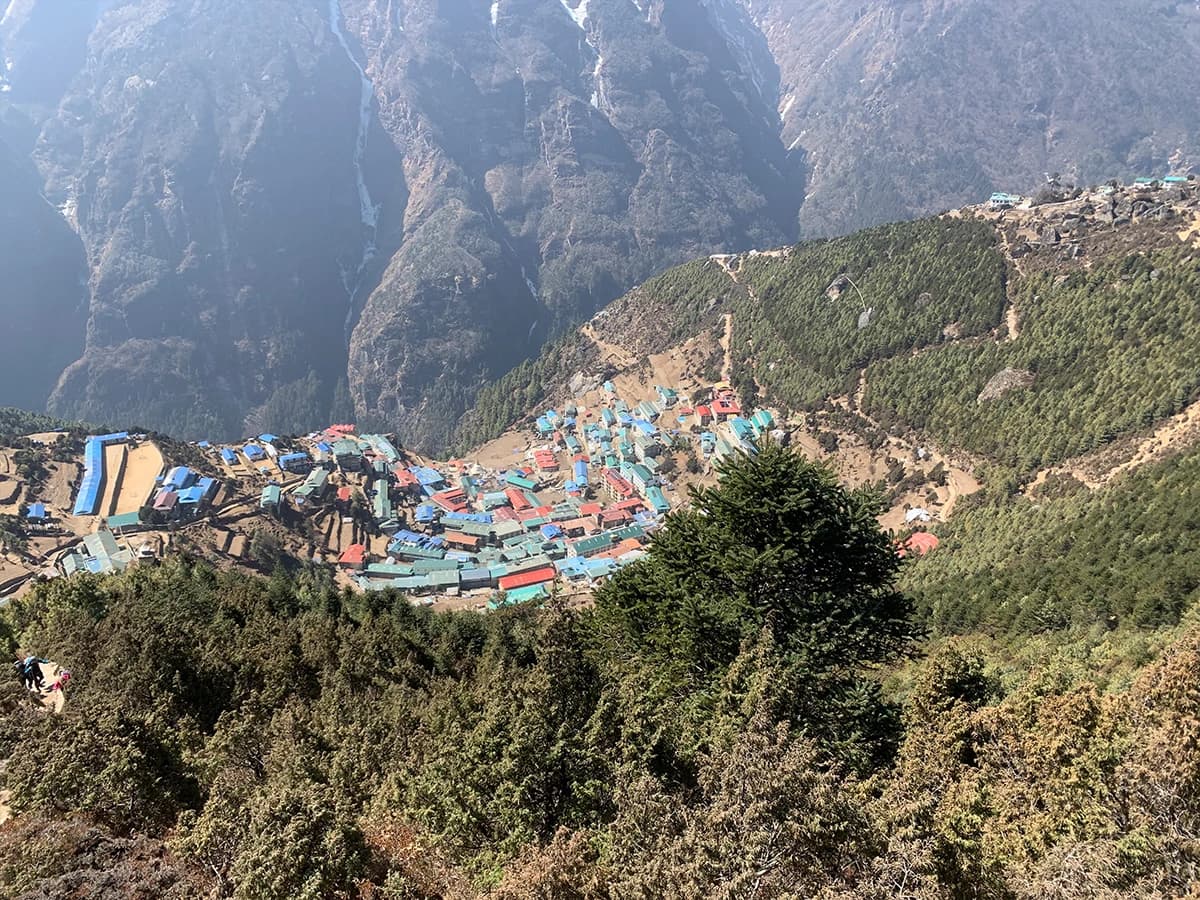
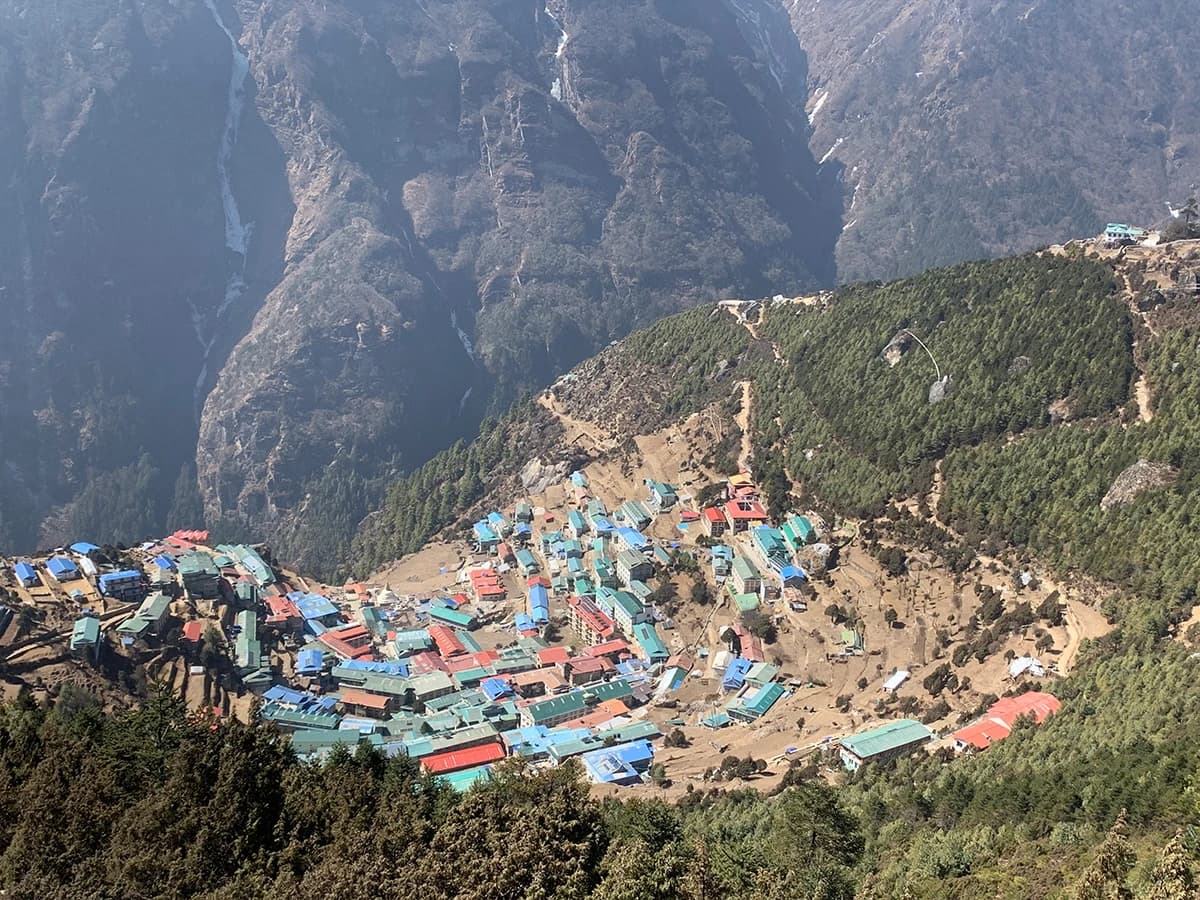
After crossing the bridge, a challenging uphill climb leads to Namche Bazaar, the bustling heart of the Khumbu region. Along the ascent, enjoy views of Thamserku Mountain, and if the weather is clear, you may catch your first glimpse of Mount Everest, along with Lhotse, Nuptse, and Kusum Kanguru. Arrive in Namche Bazaar by late afternoon and settle into your lodge.

Overnight stay at a lodge in Namche Bazaar.

Max Altitude: 3,450m Meals: Breakfast, Lunch, & DinnerAccommodation: Hotel 🏩

Namche Bazaar is known as the gateway to the high Himalayas and serves as the main trading hub and cultural center of the Sherpa community. A rest day here is essential for proper acclimatization before ascending to higher altitudes.

To aid acclimatization, a short hike will be arranged to explore nearby Sherpa villages such as Thame, one of the oldest Sherpa settlements, where you can observe traditional lifestyle and rich local culture. Depending on time and interest, visits to Khumjung, Khunde, or Khongde villages may also be possible.

Namche Bazaar offers several attractions, including the Sagarmatha National Park Headquarters, local museums, and monasteries. You may also enjoy browsing the lively marketplace, visiting cafés, bakeries, and restaurants, or simply relaxing in town.

Namche is well equipped with modern facilities such as a post office, hospital, government health post, and internet access, allowing you to stay in touch with family and friends.

Overnight stay at a lodge in Namche Bazaar.

Max Altitude: 4,040m Meals: Breakfast, Lunch, & DinnerAccommodation: Hotel 🏩 /Lodge

After leaving Namche Bazaar, the trek continues toward Dole, taking approximately 4–5 hours. The trail initially follows the classic Everest Base Camp route until reaching Sanasa, where the path diverges toward the Gokyo Valley and Renjo La Pass.

From Sanasa, the trail climbs steadily uphill to Mong La (4,000m), offering breathtaking panoramic views of the surrounding Himalayan peaks. The route then descends to Phortse Tenga, crossing the river before beginning a gradual ascent through scenic rhododendron forests.

Continuing uphill, you will arrive at the small settlement of Dole, situated high above the valley with impressive mountain scenery.

Overnight stay at a lodge in Dole.

Max Altitude: 4,470m Meals: Breaskfast, Lunch, & DinnerAccommodation: Lodge

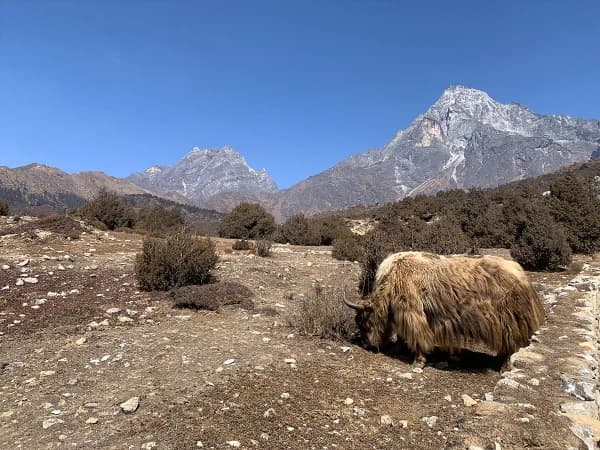
Leaving Dole early in the morning, the trek follows a gradual ascent along the valley, passing through juniper forests and open alpine terrain. Along the way, you will pass seasonal grazing areas where yaks can often be seen feeding on lush high-altitude pastures.

As the trail climbs higher, enjoy panoramic views of Cho Oyu, Kangtega, and Thamserku mountains, adding to the scenic beauty of the day’s walk.

After a steady trek, you will arrive at Machhermo, a small settlement known for its dramatic mountain surroundings and peaceful atmosphere.

Overnight stay at a lodge in Machhermo.

Max Altitude: 4,800m Meals: Breakfast, Lunch, & DinnerAccommodation: Lodge

Departing from Machhermo, the trail follows a scenic route toward Pangka, gradually ascending through open alpine landscapes. After a short descent from Pangka, the path follows a river flowing west of the vast Ngozumpa Glacier, the largest glacial system in Nepal.

The trail then climbs through rocky terrain before reaching the sacred Gokyo Lakes area. Continuing along the edge of the glacier toward Cho La (5,420m), you will pass the second Gokyo Lake. A brief walk from there leads to the third lake, Dudh Pokhari, the largest and most beautiful of the Gokyo Lakes.

The village of Gokyo is situated on the eastern shore of Dudh Pokhari, offering stunning views of the surrounding peaks and glacier.

Overnight stay at a lodge in Gokyo.

Max Altitude: 5,375m Meals: Breakfast, Lunch, & DinnerAccommodation: Hotel 🏩 /Lodge

Today is an important acclimatization and rest day, allowing your body to adapt to the increasing altitude while keeping active with a rewarding hike. The main highlight of the day is an early morning ascent of Gokyo Ri, one of the finest viewpoints in the Everest region.

From the summit of Gokyo Ri, enjoy spectacular panoramic views of Mount Everest, Lhotse, Makalu, Cho Oyu, and the vast Ngozumpa Glacier below. For those with extra energy and time, a visit to the Fifth Gokyo Lake may also be arranged.

After the hike, descend back to Gokyo village to relax and recover. Lodges in Gokyo provide a comfortable place to rest and enjoy the serene surroundings.

Overnight stay at a lodge in Gokyo.

Max Altitude: 5,340m Meals: Breakfast, Lunch, & DinnerAccommodation: Lodge

Departing Gokyo early in the morning, the trail leads into a high valley before beginning a steady climb over rock and ice spurs toward the base of Renjo La Pass. The ascent of Renjo La is challenging, taking approximately 3–4 hours, but the effort is richly rewarded.

At the summit of Renjo La (5,435m), enjoy one of the most spectacular panoramic viewpoints in the Solukhumbu region. From here, you can see Cho Oyu, Everest, Lhotse, Nuptse, Makalu, Cholatse, Tabuche, and many other majestic Himalayan peaks.

The descent from the pass follows stone steps down to a serene glacial lake, after which the trail continues along its edge toward the small settlement of Lungden, nestled in the high alpine landscape.

Overnight stay at a lodge in Lungden.

Max Altitude: 3,800m Meals: Breakfast, Lunch, & DinnerAccommodation: Lodge

After an early breakfast in Lungden (4,500m), the trek follows a scenic path through ancient, walled Sherpa villages, offering insight into traditional Himalayan life. The region is home to diverse wildlife, including yaks and Himalayan deer, making the journey both cultural and natural.

The trail follows a historic trade route connecting Nepal and Tibet, once used by Tibetan traders crossing Nagpa La Pass to reach Namche Bazaar. This route provides a glimpse into the region’s rich history and enduring cultural traditions.

By late afternoon, you will arrive in Thame, a picturesque Sherpa village surrounded by towering peaks.

Overnight stay at a lodge in Thame.

Max Altitude: 3,740m Meals: Breakfast, Lunch, & DinnerAccommodation: Lodge

After a hearty breakfast in Thame, the trek continues toward the charming village of Mende. This section passes through diverse alpine landscapes, including patches of rhododendron forest, and involves gentle rolling climbs and descents along the valley trails. Along the way, enjoy spectacular views of Thamserku, Kangtega, and surrounding peaks. Keep an eye out for wildlife, including yaks and dzos grazing in the meadows.

Mende is a small, cozy village, offering a more intimate experience compared to the larger settlements on the Everest Base Camp trek. Upon arrival, settle into your teahouse to rest and acclimatize in preparation for the climb to Kyajo Ri Base Camp the next morning. The afternoon can be spent exploring the village, interacting with locals, and enjoying the peaceful Himalayan surroundings. Dinner will be served at the teahouse as you prepare for the next day’s adventure.

Overnight stay at a teahouse in Mende.

Max Altitude: 4,550m Meals: Breakfast, Lunch, & DinnerAccommodation: Tent 🎪

Today’s trek is relatively easy and scenic as we leave Mende and follow a narrow yak trail toward a high pass. After crossing the pass, the trail descends into the Kyajo Drangka Valley, located to the south of Kyajo Ri.

The route offers spectacular views of surrounding Himalayan peaks, including Thamserku, Kusum Kanguru, Pacharmo, and several other towering mountains. Upon reaching a flat area near the river, we will set up Kyajo Ri Base Camp and prepare for the upcoming climb.

Overnight stay at Kyajo Ri Base Camp (camping).

Max Altitude: 4,550m Meals: Breakfast, Lunch, & DinnerAccommodation: Tent 🎪

Today is a rest and preparation day at Kyajo Ri Base Camp, allowing your body to acclimatize and recover before the climb. You will receive detailed instructions on peak climbing techniques and guidance on the safe and proper use of essential climbing gear, including ice axes, crampons, harnesses, and ascenders. Additionally, you will be briefed on safety protocols and emergency procedures, ensuring you are prepared to handle any challenging situations on the mountain. This day is also an opportunity to organize your equipment, review the summit plan, and mentally prepare for the ascent.

Overnight stay at Kyajo Ri Base Camp (camping).

Max Altitude: 5,300m Meals: Breakfast, Lunch, & DinnerAccommodation: Tent 🎪

After a day of rest and practice at Base Camp, we begin our ascent to Camp 1. The trek starts along a grassy spur, gradually leading to a rocky section strewn with boulders and pebbles. Upon reaching a suitable flat area, we will set up Camp 1, offering a comfortable and secure spot to rest. The campsite provides breathtaking panoramic views of the surrounding peaks, making it an inspiring location to spend the night.

Overnight stay at Camp 1 (camping).

Max Altitude: 5,300m Meals: Breakfast, Lunch, & DinnerAccommodation: Tent 🎪

Today is a rest and acclimatization day at Camp 1, allowing your body to adjust to the higher altitude and reduce the risk of altitude sickness. The day is focused on light activities, such as short, gentle walks around the campsite, while maintaining proper hydration and nutrition. Strenuous exertion is avoided to support your body’s acclimatization process, ensuring you are well-prepared for the next stage of the climb.

Overnight stay at Camp 1 (camping).

Max Altitude: 5,700m Meals: Breakfast, Lunch, & DinnerAccommodation: Tent 🎪

Today’s ascent involves technical climbing on mixed slopes of up to 55°, including glacier crossings. The trail requires careful navigation over snow, ice, and rocky sections. Camp 2 is situated near a large glacier, offering ample space to set up tents. From this vantage point, you can observe the summit route planned for the following day. If the weather is favorable, the camp receives plentiful sunlight, which not only boosts morale but also helps dry any damp gear. After a demanding day of climbing and acclimatization, you will rest overnight at Camp 2, preparing your body and mind for the final summit push.

Overnight stay at Camp 2 (camping).

Max Altitude: 5,700m Meals: Breakfast, Lunch, & DinnerAccommodation: Tent 🎪

Today is the highlight of the expedition—the summit push to Kyajo Ri. It will be a long and physically demanding day, but the breathtaking views and sense of achievement make it immensely rewarding.

We will begin before sunrise, enjoying a quick breakfast before setting out. The climb starts over boulders and glacier terrain, leading to the southwestern ridge. From there, we tackle a mix of snow, ice, and small rock sections en route to the summit.

At the 6,186m summit, take time to soak in the panoramic Himalayan views and capture memorable photos. After celebrating your achievement, we will carefully descend back to Camp 2 for rest and recovery.

Overnight stay at Camp 2 (camping).

Max Altitude: 4,550m Meals: Breakfast, Lunch, & DinnerAccommodation: Tent 🎪

Today is a free contingency day, included in the itinerary to accommodate any unforeseen delays during the climb. Factors such as weather conditions, altitude adjustments, or the fitness of team members can affect the schedule, and this day ensures we stay on track without compromising safety.

It also provides an opportunity to rest, recover, and enjoy the surrounding scenery, helping the team maintain energy and readiness for the descent or any remaining summit attempts.

Overnight stay at Camp 2 (camping) or Base Camp, depending on the previous day’s progress.

Max Altitude: 4,550m Meals: Breakfast, Lunch, & DinnerAccommodation: Tent 🎪

Today we descend back to Kyajo Ri Base Camp, marking the successful completion of the climb. The trek down is generally easier, as the route is familiar and the terrain well known.

Upon arrival at Base Camp, take time to relax, reflect, and celebrate the achievements of the expedition. You may choose to explore the surrounding area or hike a short distance to a nearby viewpoint for a final perspective of the stunning Himalayan scenery.

This is also a moment to share stories, reminisce about challenges overcome, and enjoy the camaraderie of the team after an incredible journey. Whether resting or taking in the views, the day offers a well-earned sense of accomplishment.

Overnight stay at Base Camp (camping).

Max Altitude: 3,450m Meals: Breakfast, Lunch, & DinnerAccommodation: Hotel 🏩

Today, we begin the descent from Kyajo Ri Base Camp back toward Namche Bazaar. The trail is mostly downhill, making for an easier and more relaxed trek compared to the ascent. Along the way, we pass through rhododendron forests and small Sherpa settlements, enjoying the sights of traditional village life and the surrounding alpine scenery. By late afternoon, we arrive in Namche Bazaar, where you can rest, explore the town, and enjoy the lively atmosphere of this Himalayan hub.

Overnight stay at a lodge in Namche Bazaar.

Max Altitude: 2,800m Meals: Breakfast, Lunch, & DinnerAccommodation: Hotel 🏩

Today, we continue our descent from Namche Bazaar toward Lukla. The trail gently winds downhill, crossing the Dudh Koshi River via suspension bridges and passing through Monjo, where we complete the official formalities at the Sagarmatha National Park check post.

From Monjo, we retrace the trail to Phakding for lunch before continuing to Lukla. The route is scenic and colorful, adorned with prayer stones, mani walls, and prayer flags, creating a serene and spiritual atmosphere.

Upon arrival in Lukla, we stay overnight at a lodge. In the evening, we celebrate the successful completion of our trek with our Sherpa guides and porters, honoring the teamwork and friendships formed during this unforgettable journey.

Overnight stay at a lodge in Lukla.

Max Altitude: 1,337m Meals: BreakfastAccommodation: Hotel 🏩

We rise early this morning for breakfast and prepare for our flight back to Kathmandu. The short flight offers stunning aerial views of the Himalayas as we leave the high mountains behind. Upon arrival at Tribhuvan International Airport, you will be greeted by our representatives and transferred to your hotel in Kathmandu. The rest of the day is free to relax, explore the city, shop, or enjoy a final taste of Kathmandu at your own pace.

Overnight stay at a hotel in Kathmandu.

Max Altitude: 1,337m Meals: BreakfastAccommodation: Hotel 🏩

Today is a free day in Kathmandu to relax and enjoy the city at your own pace. You may choose to take a day tour of Kathmandu’s cultural and historical highlights, or explore Thamel, the vibrant tourist hub, where you can shop for souvenirs, handicrafts, and local artwork for family and friends.

In the evening, we will gather for a farewell dinner to celebrate the successful completion of our climb. Enjoy a delightful meal accompanied by a traditional cultural dance performance by local artists, creating a memorable finale to your Himalayan adventure.

If you wish to extend your stay in Nepal, please let us know. You can email us for details on customized extensions or additional activities.

Overnight stay at a hotel in Kathmandu.

Meals: Breakfast

The day of departure has arrived. We sincerely thank you for joining us on this incredible journey, and it has been a pleasure sharing this adventure with you. We hope your climb has been a rewarding experience, leaving you with lasting memories of the Himalayas and the people you met along the way.

Our team will assist you with final preparations and ensure all arrangements are in place. You will then be transferred to Tribhuvan International Airport at least three hours before your scheduled flight for your onward journey.

We wish you a safe and pleasant journey home, and we hope to hear from you again for future adventures.

Kyajo Ri Peak Climbing Cost Details

Includes

  • Fully guided climb with experienced climbing guides on a 1:3 ratio (Guide to client ratio)
  • Meals and Accommodation at Tea Houses/Lodges during the trekking period
  • Meals and High-quality mountain tents for the climbing period
  • Kyajo Ri Peak permit with garbage deposit.
  • National Park Fees
  • KTM-LUKLA-KTM Airfare
  • Double Twin sharing accommodation at Kathmandu guest house or similar category for 4 nights with breakfast
  • Kathmandu airport transfers and escorts
  • Comprehensive first aid kit with supplementary oxygen system
  • Personal/Group climbing gear
  • Porterage of equipment required during trekking and climbing
  • Waterproof Duffel bag, Sleeping bag, and Down Jacket (Sleeping bag and down jacket must be returned after completion of the trek)
  • Peak climbing certificate issued by the Nepal Mountaineering Association
  • Staff summit bonus, insurances, and allowances

Excludes

  • International airfare, Visa and travel insurance
  • Personal climbing gears
  • Meals at Kathmandu
  • Extra night accommodation in Kathmandu or on trek for any reason (Early arrival or delay, Early arrival from trek due to any reason)
  • Personal expenses and tips

Dates & Availability

Mar 2026
Apr 2026
May 2026
Sep 2026
Oct 2026
Nov 2026
Departure Date
Price
Trip Status
Departure Date
25 DaysMar 03, 2026 - Mar 27, 2026
Price
US$5000
Trip Status
Available
20 % Deposit
Departure Date
25 DaysMar 08, 2026 - Apr 01, 2026
Price
US$5000
Trip Status
Available
20 % Deposit
Departure Date
25 DaysMar 15, 2026 - Apr 08, 2026
Price
US$5000
Trip Status
Available
20 % Deposit
Departure Date
25 DaysMar 22, 2026 - Apr 15, 2026
Price
US$5000
Trip Status
Available
20 % Deposit
Departure Date
25 DaysMar 29, 2026 - Apr 22, 2026
Price
US$5000
Trip Status
Available
20 % Deposit

Availability

  • Available as group departures or private trips
  • Group departures are guaranteed once confirmed
  • Private trips can be customized for dates and special requirements

Solo Travellers:- Some departures require a minimum of two participants. If booking solo, please contact us before confirming your reservation.

Essential Information

How Difficult Is the Climb of Kyajo Ri?

Grading: 7–8 (Strenuous)

Kyajo Ri (6,186m) is considered a semi-technical to technical peak due to its steep and varied terrain. The ascent involves a combination of snow, ice, and rock, with slopes ranging from 50° to 55°. While the climb does not involve extreme technical difficulty, it requires solid mountaineering fundamentals.

Climbers should be confident in:

  • Walking with crampons on steep snow and ice
  • Using an ice axe (including self-arrest)
  • Roped travel and basic belaying
  • Abseiling and ascending fixed ropes

Compared to other popular trekking peaks in Nepal such as Mera Peak, Island Peak, or Lobuche East, Kyajo Ri demands greater technical skill and experience, also due to its remote nature and lower number of ascents.

Prerequisites for Climbing Kyajo Ri

To successfully climb Kyajo Ri, climbers must be in excellent physical condition and mentally prepared for extended days in a high-altitude environment.

Recommended prerequisites:

  • Prior experience on high-altitude treks or smaller peaks
  • Basic knowledge of rock climbing, crampon use, ice axe techniques, and roped travel
  • Strong cardiovascular fitness and endurance
  • Teamwork, determination, and a positive mindset

Ample acclimatization days are built into the itinerary, and a pre-climb training session will be conducted at base camp where guides will review and practice technical skills.

Approach and Route

The Kyajo Ri expedition follows a 25-day itinerary, with 21 days spent in the mountains.

Route highlights include:

  • Trekking through the Gokyo Valley
  • Acclimatization climb of Gokyo Ri (5,357m)
  • Crossing Renjo La Pass (5,340m) into the Thame Valley
  • Trek to Kyajo Ri Base Camp
  • Summit ascent via the South-West Ridge

Extra contingency days are included to account for weather or unforeseen delays.

Best Season to Climb Kyajo Ri

The best seasons for climbing Kyajo Ri are:

  • Spring (March–May): Stable weather, mild temperatures, longer daylight hours, and excellent visibility
  • Autumn (September–November): Dry conditions, clear skies, cooler temperatures, and stunning mountain view
  • Winter climbs are possible but extremely challenging due to cold and snowfall. The monsoon season (June–August) is not recommended due to heavy rain, slippery trails, and poor visibility.

Guide-to-Client Ratio

  • On summit day, a 1:3 guide-to-client ratio is maintained:
  • One highly experienced lead guide
  • One additional Sherpa guide per three climbers

This ensures close supervision, enhanced safety, and personalized support throughout the ascent. All Sherpa guides are highly experienced and deeply familiar with the region.

Training for Kyajo Ri

Preparation should begin several months in advance.

  • Training focus areas:
  • Cardiovascular endurance (hiking, running, stair climbing)
  • Strength training for steep ascents and carrying a 15 kg backpack
  • Technical training with crampons, ice axe, harness, and ropes

Weekly uphill hikes with a weighted pack are highly recommended. If technical experience is limited, basic mountaineering training should be completed prior to the expedition.

Drinking Water Availability

Unlimited boiled water is provided during the trek and at lower camps

  • At higher camps, water may be obtained by melting snow or ice
  • Climbers should carry at least two reusable water bottles

Single-use plastic bottles are discouraged. Water purification tablets are recommended for additional safety.

Group Size

  • Minimum: 1 person
  • Maximum: 12 participants

Small group sizes ensure better coordination, safety, and a more personalized climbing experience.

Travel Insurance

  • Travel insurance is mandatory and must include:
  • High-altitude trekking and climbing
  • Emergency helicopter evacuation
  • Medical coverage
  • Carry proof of insurance and leave a copy with your next of kin.

Safety Measures

  • Carefully designed acclimatization itinerary
  • Experienced and certified guides
  • High staff-to-client ratio
  • Emergency oxygen and medical kits carried on all climbs
  • Safety is prioritized at every stage of the expedition.

Typical Day on the Expedition

  • Wake-up: 6:00–7:00 AM
  • Morning trek: 3–4 hours
  • Lunch break mid-day
  • Short afternoon walk to destination
  • Evening free for rest, exploration, or briefing

Evenings are relaxed with dinner, discussions, and preparation for the next day.

Permits for Kyajo Ri

  • Peak climbing permit of Kyajo Ri.
  • Entry permit of Khumbhu Pasang Lhamu Rural Municipality.
  • Entry permit of Sagarmatha National Park.

FAQs for Kyajo Ri Peak Climbing

The Kyajo Ri Climb offers breathtaking panoramas at every stage, with its most spectacular vantage point being the summit at 6,186 meters. From the top, climbers are rewarded with sweeping views across the entire Khumbu Himal range, including four of the world’s highest peaks: Mount Everest, Lhotse, Makalu, and Cho Oyu.

The journey itself is equally rewarding. The approach to Base Camp and the ascents through Camp I and Camp II unveil stunning perspectives of the surrounding landscapes. These camps provide remarkable views of the Gokyo Valley and the Thame Valley, immersing climbers in the dramatic beauty of Nepal’s high Himalayas.

Climbing Kyajo Ri is regarded as a technically challenging ascent, typically graded PD+ to AD- on the alpine difficulty scale. The route demands a combination of skills, including glacier travel, negotiating steep snow and ice slopes, and occasional rock scrambling. In several sections, climbers may need to rely on fixed ropes for safety and progression.

Because of these technical requirements, the climb is best suited for those with prior mountaineering experience. Proficiency in the use of ice axes, crampons, ropes, and other technical equipment is essential. Kyajo Ri is not recommended for beginners; instead, it is an ideal objective for climbers seeking to advance their skills on a demanding Himalayan peak.

A standard Kyajo Ri expedition usually lasts 12 to 16 days, though the exact length depends on the chosen itinerary and trekking route to Base Camp. This timeframe typically includes:

  • Trekking days to and from the mountain.
  • Acclimatization days carefully scheduled to help climbers adjust to the increasing altitude.
  • Climbing days dedicated to the ascent itself.
  • Contingency days built into the plan to account for weather conditions or other potential delays.

This balanced schedule ensures both safety and success, giving climbers the time needed to adapt and fully experience the Himalayan adventure.

The Kyajo Ri expedition offers a remarkable blend of natural beauty and cultural richness. Along the journey, trekkers are immersed in:

  • Spectacular mountain vistas: Close-up views of towering Himalayan giants, including Everest, Lhotse, Makalu, and Cho Oyu.
  • Sherpa villages: Picturesque settlements where you’ll witness traditional lifestyles and enjoy the warm hospitality of the Sherpa people.
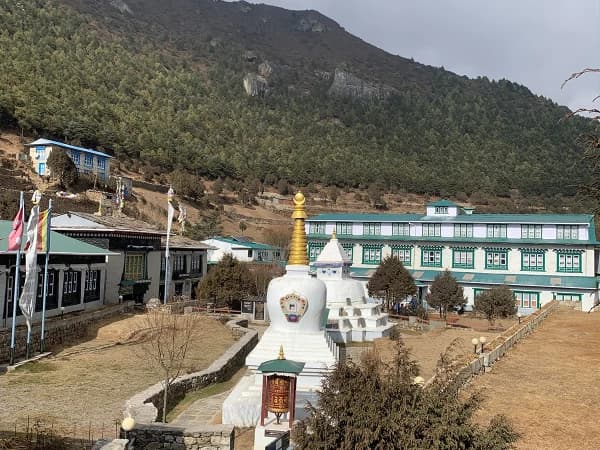
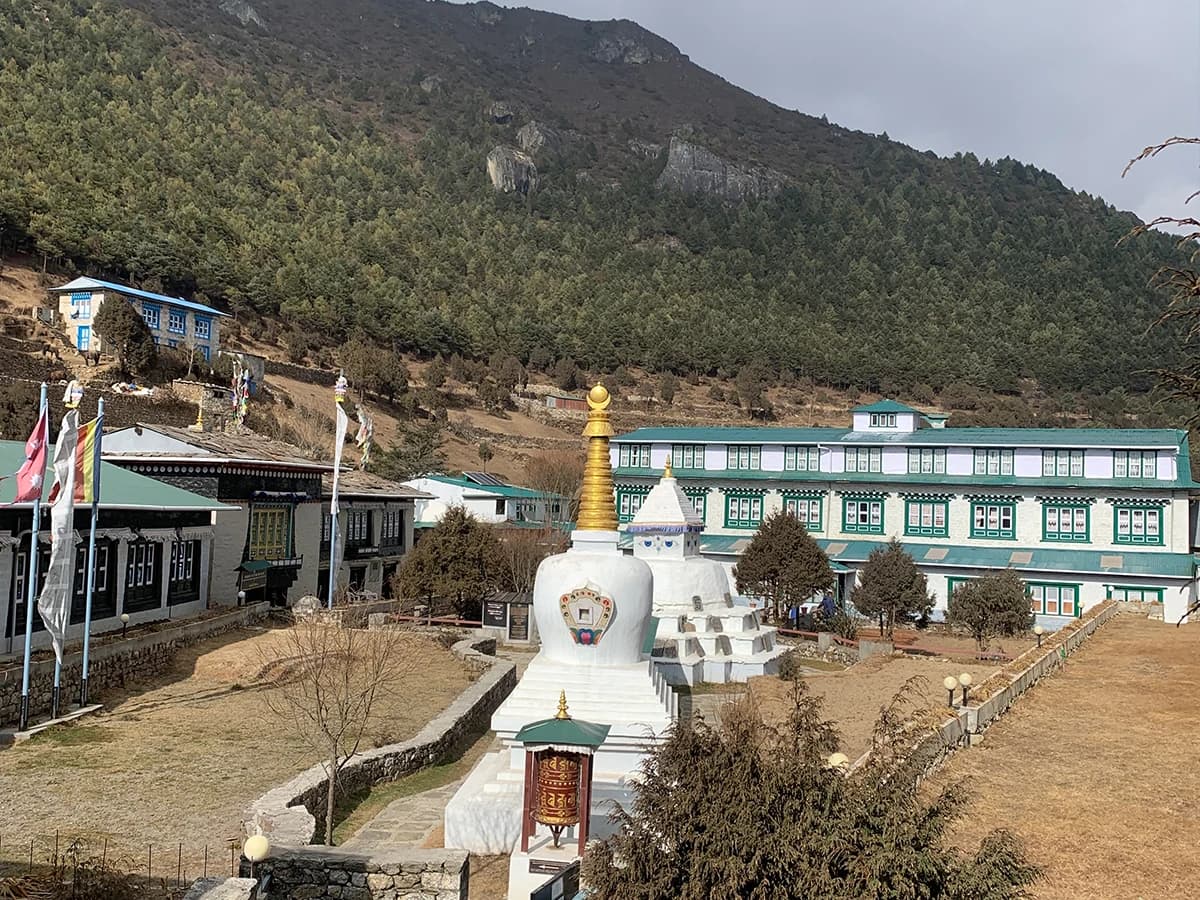
  • Cultural landmarks: Beautiful Buddhist monasteries, colorful prayer wheels, and fluttering prayer flags that add spiritual depth to the trek.
  • Diverse landscapes: From lush valleys and alpine meadows to rugged high-altitude terrain, each stage of the climb reveals new scenery.

This combination of awe-inspiring Himalayan panoramas and authentic cultural encounters makes the Kyajo Ri expedition both a physical challenge and a deeply enriching experience.

Climbing Kyajo Ri demands a very high level of physical fitness. Trekkers should be prepared for:

  • Strenuous multi-day trekking across challenging terrain.
  • Carrying a loaded backpack while ascending and descending steep trails.
  • Long hours of sustained exertion at high altitudes, where oxygen levels are significantly reduced.

To prepare, climbers are strongly advised to undertake comprehensive training that includes:

  • Cardiovascular conditioning (running, cycling, swimming) to build stamina.
  • Strength training to handle the physical demands of carrying gear and climbing.
  • Altitude experience through prior trekking or climbing at lower elevations to develop endurance and adaptability.

This combination of fitness and preparation is essential to safely and successfully tackle the technical challenges of Kyajo Ri.

Acclimatization is absolutely critical for a safe and successful ascent of Kyajo Ri. A well-planned itinerary includes several acclimatization days at progressively higher altitudes, allowing the body to gradually adapt to reduced oxygen levels.

Neglecting proper acclimatization can result in serious altitude-related illnesses such as:

  • Acute Mountain Sickness (AMS)
  • High Altitude Pulmonary Edema (HAPE)
  • High Altitude Cerebral Edema (HACE)

These conditions can be life-threatening, which is why following acclimatization guidelines is essential. Taking the time to adjust not only safeguards your health but also greatly increases your chances of reaching the summit successfully.

Like any high-altitude expedition, climbing Kyajo Ri comes with inherent risks and challenges. These include:

  • Altitude-related illnesses such as Acute Mountain Sickness (AMS), which can escalate to more serious conditions if ignored.
  • Unpredictable weather, including sudden storms, high winds, and extreme cold.
  • Glacier hazards, particularly hidden crevasses that require careful navigation.
  • Steep terrain risks, where slips or falls on snow and ice slopes can be dangerous.
  • Rockfall and avalanches, natural hazards that may occur unexpectedly.
  • Physical strain, with extreme fatigue from long days of trekking and climbing at high altitude.
  • Unforeseen conditions, ranging from equipment issues to environmental challenges.

To mitigate these risks, climbers must be well-prepared, remain vigilant, and follow their guide’s instructions carefully throughout the expedition.

Comprehensive travel insurance is absolutely essential for a Kyajo Ri expedition. Because the climb involves high-altitude mountaineering, your policy must specifically cover activities up to the peak’s elevation. Key areas of coverage should include:

  • Medical expenses for illness or injury at altitude.
  • Emergency evacuation, including costly helicopter rescues in the Himalayas.
  • Trip cancellation or interruption, protecting you against unforeseen changes.
  • Loss or damage to personal belongings, such as gear and equipment.

It is vital to carefully review the limitations and exclusions of your policy to ensure it fully meets the demands of a high-altitude expedition.

The journey to Kyajo Ri Base Camp begins with a scenic flight from Kathmandu to Lukla, the gateway to the Everest region. From Lukla, climbers set out on a multi-day trek that winds through traditional Sherpa villages, offering glimpses of local culture and hospitality. The trail gradually ascends through lush valleys, alpine meadows, and rugged mountain landscapes, providing breath-taking views at every stage.

This approach not only builds anticipation for the climb but also allows for gradual acclimatization as you make your way toward the high Himalayas.

During the trekking phase of the Kyajo Ri expedition, accommodation is typically in teahouses—simple guesthouses that provide basic rooms with beds and blankets. These teahouses also feature communal dining areas where trekkers can enjoy hearty meals and connect with fellow adventurers.

At Base Camp, climbers stay in mountain tents, usually shared between two people. These tents are built to withstand the challenging Himalayan conditions, offering reliable shelter at high altitude. Meals at Base Camp are served in a communal dining tent, creating a warm and social atmosphere even in the rugged mountain environment. This combination of teahouse hospitality and tented camps ensures both cultural immersion and the authentic experience of high-altitude mountaineering.

Need Help? Call Us+977 9849138788