Ama Dablam & Lobuche Expedition

9 reviews in TripAdvisor
16 reviews in Google Reviews
Duration
30 Days
Trip Grade
Technically Challenging
Country
Nepal
Maximum Altitude
6,119m/6,812m
Group Size
1/ 10 pax
Starts
Kathmandu
Ends
Kathmandu
Activities
Peak Climbing
Best Time
October & November

Ama Dablam 6,812m

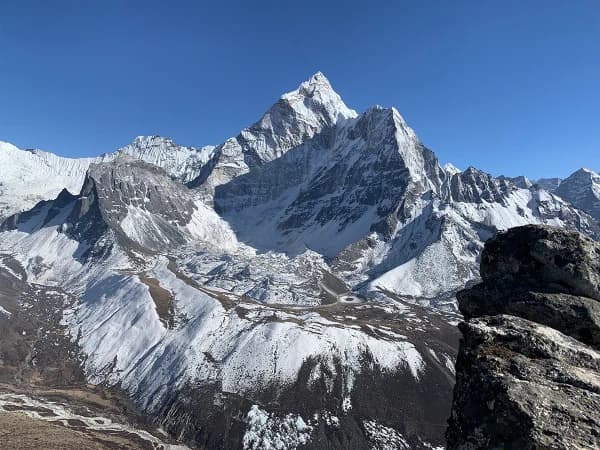
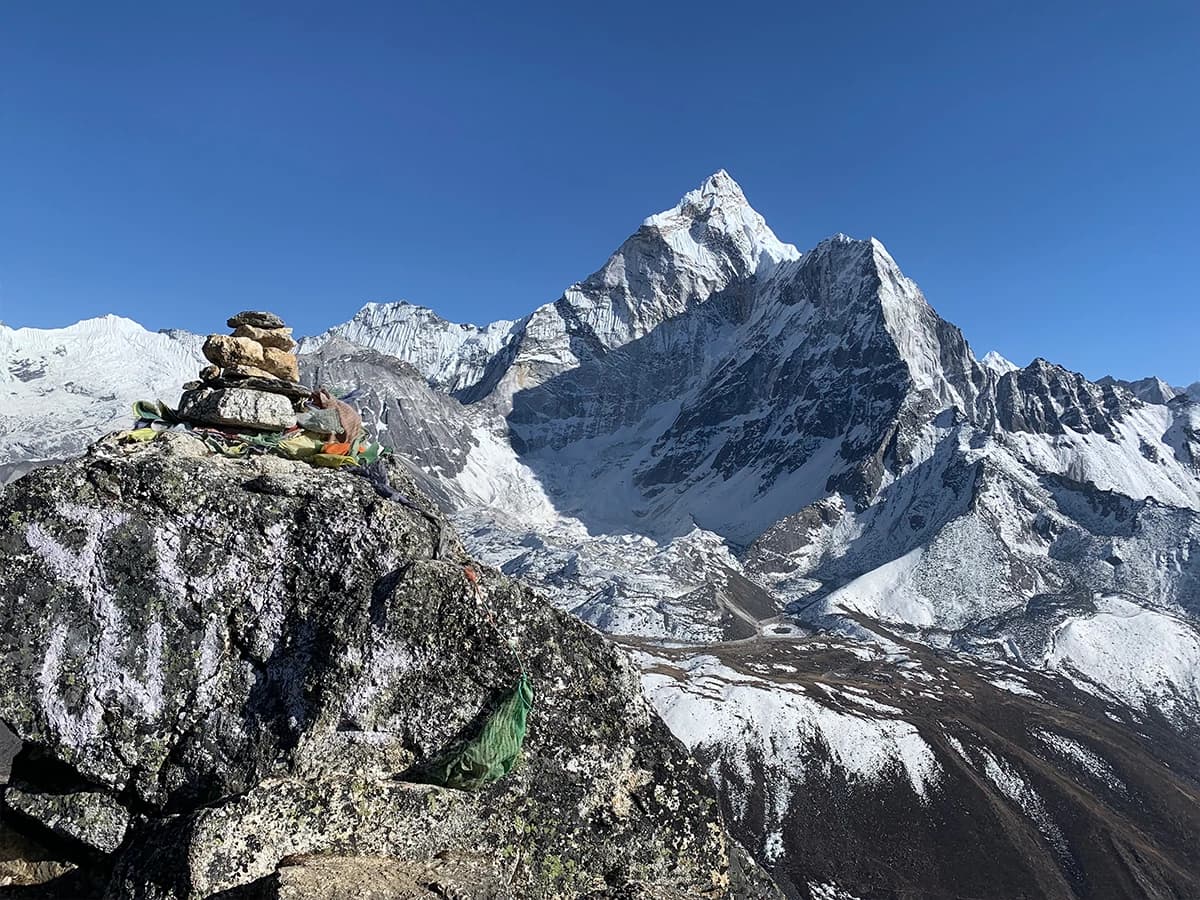
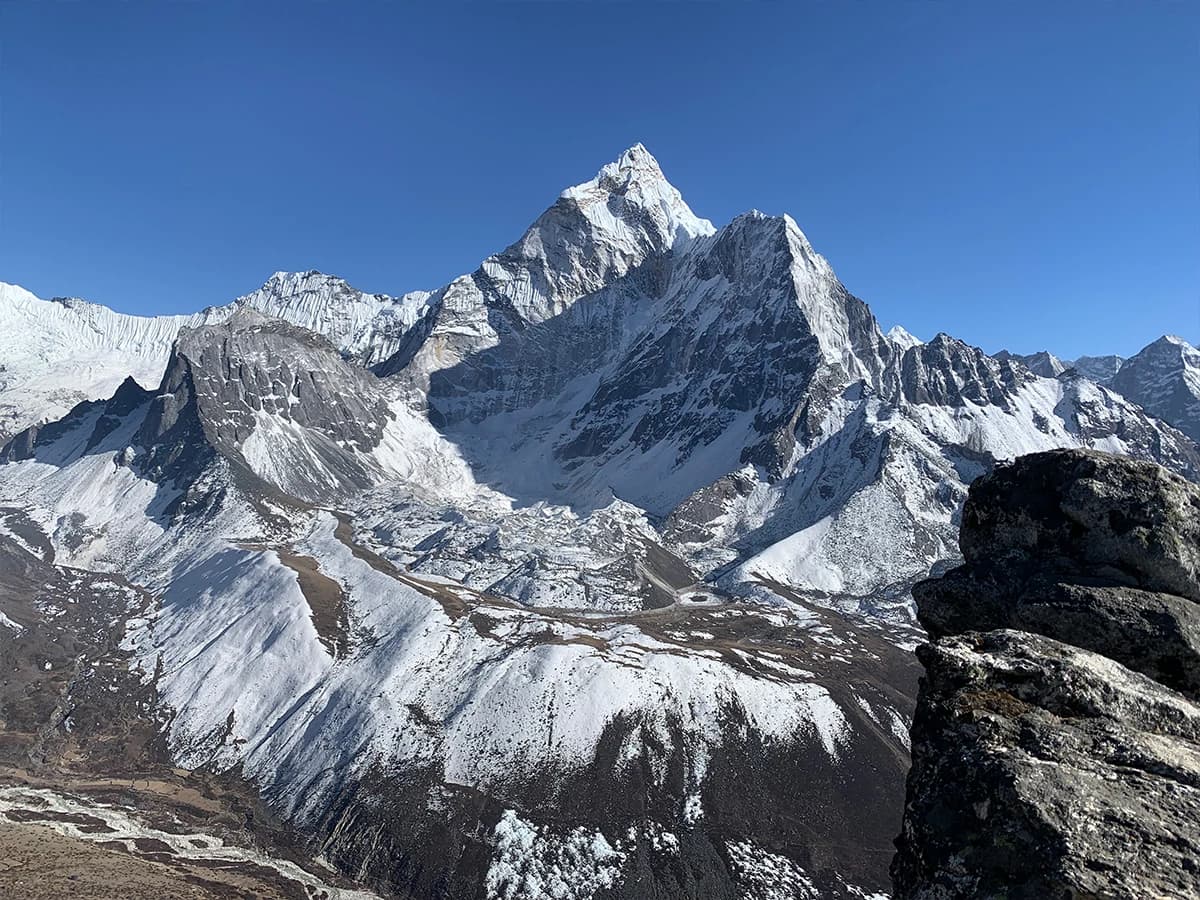
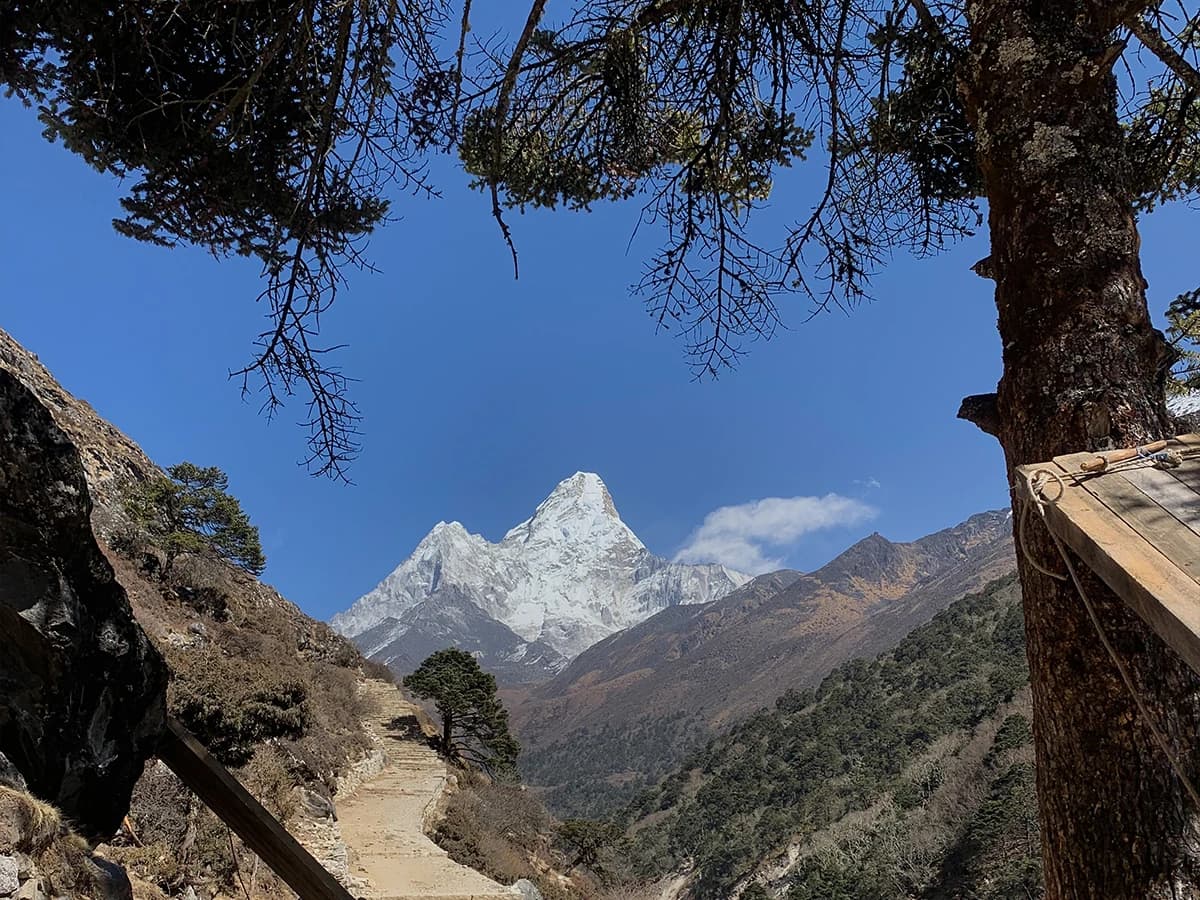
Ama Dablam, often cited as the "Mountaineer's Mountain," represents the pinnacle of high-altitude technical climbing in the Khumbu massif. Its dramatic geological profile—defined by precipitous ridgelines, a sharp pyramidal summit, and the iconic hanging serac resembling a Dablam (mother’s pendant)—elevates it far beyond a standard expedition. Ascending this 6,812mpeak is a demanding endeavour, necessitating precision, sustained focus, and a robust foundation in contemporary alpine techniques.

Our expedition is structured around a superior dual-objective framework, integrating the ascent of Lobuche East (6,119m) as a strategic preparatory phase for Ama Dablam. This design is engineered to optimize physiological adaptation and technical readiness.

The initial traverse follows an accelerated, high-altitude approach. The itinerary leverages the Gokyo Lakes circuit and a crossing of the Cho La Pass (5,420m). Summiting Lobuche East serves as a critical pre-acclimatization climb. This strategy ensures climbers arrive at Ama Dablam Base Camp with fully established acclimatization protocols and revalidated climbing proficiency. The efficacy of this integrated approach is validated by internal metrics, showing consistently elevated summit success rates and demonstrable improvements in climber performance since its implementation in 2022.

The primary ascent utilizes the globally accepted and logistically optimized South-West Ridge. This route provides a comprehensive technical challenge. The summit platform offers an unparalleled 360 degree panorama of the Himalayan giants, providing optimal viewing of the surrounding eight-thou sanders, including Mount Everest, Cho Oyu, Makalu, and Lhotse.

Highlights

  • Climb Ama Dablam (6,812m) and Lobuche East Peak (6,119m) together.
  • Well-devised approach via Gokyo and Chola Pass.
  • Fully supported expedition with the experienced guides.
  • 1:1 Sherpa supporters on Ama Dablam Expedition.
  • Get an adventure plane 35 minutes flight from Kathmandu to Lukla with majestic aerial views.
  • Explores Everest region picturesque village with the breathing views of world’s highest Mount. Everest 8,848.86m.

What makes Ama Dablam Expedition more exclusive?

Our Ama Dablam Expedition includes an ascent of Lobuche Peak (6,119m / 20,075ft) to minimise the need for multiple acclimatization rotations on Ama Dablam’s higher camps. Many climbers struggle on Ama Dablam due to rapid altitude gain, repeated exposure to the technical ridges, and the physical demands of climbing up and down for rotations. By summiting Lobuche first, we significantly reduce the stress placed on climbers during the critical stages of the Ama Dablam ascent.

We’ve designed this itinerary to progress with purpose and efficiency. After a scenic trek to the Gokyo Lakes, we cross the Cho La Pass and climb Lobuche East. This approach ensures gradual acclimatization before arriving at Ama Dablam Base Camp fully prepared and better adapted to the altitude.

Instead of conducting several rotations on Ama Dablam’s upper camps, we take a more effective strategy: trekking through the Gokyo region and gaining altitude steadily in a rewarding mountain environment. The climb of Lobuche Peak not only builds strong acclimatization but also refreshes essential technical skills, giving climbers a solid foundation before tackling Ama Dablam. Since introducing this itinerary in 2022, we have seen consistently higher summit success rates and smoother expedition flow. Climbers who acclimatize on a different peak beforehand tend to perform better and experience fewer altitude-related challenges on Ama Dablam.

At Ama Dablam Base Camp, you will find a well-equipped, comfortable environment designed for rest, skills training, and final acclimatization. Training sessions and a traditional puja ceremony help you ease into the mountain environment and prepare mentally and physically for the climb ahead.

Above Base Camp, three higher camps lead the way to the summit:

  • Camp 1: 5,600m / 18,368ft
  • Camp 2: 5,900m / 19,352ft
  • Camp 3: 6,200m / 20,664ft

This structured, purposeful approach ensures climbers are strong, confident, and well-acclimatized by the time they move onto Ama Dablam’s technical upper sections.

Why climb Ama Dablam with Sherpa Summits?

  • Guided by an elite team of experienced guides and Sherpa professionals.
  • Ascent of Lobuche East Peak (6,119 meters) for optimal acclimatization.
  • 1:1 Sherpa-to-climber ratio on summit day for maximum safety and support.
  • Commitment to the highest standards of expedition safety and quality.
  • A premier, well-structured climbing experience on Ama Dablam (6,812 meters).
  • Small, cohesive team for better coordination, support, and success.

Ama Dablam Expedition – Summit Plan

  1. Day 01–10: Trek through the Gokyo region and cross the Cho La Pass
  2. Day 12–14: Summit Lobuche East
  3. Day 15–16: Trek to Ama Dablam Base Camp
  4. Day 17–18: Rest, training, and acclimatization at Base Camp
  5. Day 19: Climb to Camp 1 and overnight
  6. Day 20: Move to Camp 2 and overnight
  7. Day 21: Summit push before dawn and return to Camp 2
  8. Day 22: Descend to Base Camp
  9. Day 23–25: Contingency days
  10. Day 26–28: Trek out and fly to Kathmandu
  11. Day 29–30: Kathmandu stay and departure

This itinerary may vary based on weather, team condition, and other on-ground factors. Flexibility is essential for all high-altitude expeditions.

Personalised Ama Dablam Expedition

Our Ama Dablam expeditions are intentionally designed for small, cohesive teams. Each climber is supported by highly experienced Sherpa guides, ensuring strong supervision and increased safety on every section of the mountain. For groups of four or more climbers, we provide an IFMGA-certified mountain guide to lead the team.

Keeping the group size small allows for better coordination, efficient movement on the mountain, and a more personalized climbing experience overall.

Equipment list for Ama Dablam & Lobuche Expedition

The gear listed below is required for the Ama Dablam Expedition. We encourage you to get all equipment listed below and kindly ensure you check and try every piece of equipment. You can also buy or hire the same in Kathmandu as they are available in the many trekking shops from branded to local manufacturers in Kathmandu.

Head gears:

  • Sunhat X 1
  • Warm hat (should cover head & ear comfortably) X 2
  • Buffs X 2
  • Sunglasses/Glacier Glasses (High-quality, UV-blocking sunglasses with good all-around protection) X 1
  • Ski Googles (Anti Fog and Good Ventilation)
  • Headlamp with spare batteries (200-300 lumens output) X 2

Upper Body:

  • Thermal or fleece base layer top X 3
  • Trekking shirts / t-shirts (Breathable & quick-dry materials) X 3
  • Mid weight top X 2
  • Soft-shell jacket / fleece jacket X 2
  • Prima-loft or light down jacket X 1
  • Waterproof jacket X 1
  • Hardshell Gore Tex jacket with hood X 1
  • Insulated Down Jacket with hood X 1
  • Expedition Down Suit X 1

Lower Body:

  • Thermal or fleece base layer bottom X 3
  • Trekking trousers/pants X 3
  • Mid weight trousers/pants X 2
  • Waterproof pant X 1
  • Hardshell GoreTex pant X 1 (Non-insulated and waterproof)
  • Insulated down pant X 1

Underwear:

  • 5 pairs of synthetic or wool fabrics only
  • Foot Wear:
  • Hiking Boots X 1
  • Camp shoes X 1
  • 8000m Mountaineering Boot X 1
  • Hiking socks X 4 pairs medium to heavy (synthetic and wool)
  • Liner socks X 2
  • Summit socks X 2
  • Flip flops X 1

Hand Wear:

  • Liner Gloves X 2
  • Midweight gloves X 1
  • Heavy weight gloves( Leather Palm) X 1
  • Down Mittens / Summit gloves X 1

Gears / Personal equipment:

  • Daypack 45-55 liters (To carry water and personal items that you may require while trekking and climbing)
  • Duffel bag (provided by us at request)
  • Down Sleeping bag (-20 C rated) for Base Camp
  • Down Sleeping bag (-30 C rated) for higher camps
  • Thermarest mattress
  • Garmin InReach
  • One liter capacity water bottle X 2 (Nalgene)
  • Insulated Cover for Water bottle X 1
  • Trekking poles X 1
  • Camera with charger or spare batteries
  • Personal snacks and energy bars
  • Laundry bag to keep the dirty clothes
  • Padlock
  • Large plastic bags to keep the clothes dry
  • Extra clothes to wear in Kathmandu
  • Umbrella / Poncho

Toiletries and hygiene

  • Quick drying towel
  • Small face towel
  • Toothbrush &Toothpaste
  • Face mask
  • Water treatment tools
  • Soap and Shampoo (Smaller bottle)
  • Face and body moisturizer
  • Sun screen SPF50+ and Lip balm SPF 30+
  • Hand sanitizer/Antiseptic wipes
  • Hygiene products
  • Basic first aid kit

Climbing Gears:

  • Helmet
  • Ice Axe
  • Crampons
  • Harness
  • Carabiners (3 X Screw Gate and 3 X Snap Gate)
  • Descender (ATC Guide/Figure of 8)
  • Ascender/Jumar (Large Handle)
  • Prussik Cord X 2
  • 8mm climbing cord of 3 meters

Documents:

  • Passport with validity of 6 months.
  • Credit cards in case of emergencies
  • Driving ID or any other ID in case of loss of your passport
  • Travel Insurance (Please refer to the general information page for more detail about it)
  • Flight tickets

Ama Dablam & Lobuche Expedition Itinerary

Kathmandu to KathmanduExpand all
Max Altitude: 1,337m Meals: BreakfastAccommodation: Hotel 🏩

Upon arrival at Tribhuvan International Airport, Nepal, and after completing your visa formalities and collecting your luggage, please proceed to the exit of the arrival hall. Our representative from Sherpa Summits will be waiting just outside with a company placard and will escort you to your hotel in Kathmandu.

Max Altitude: 1,337m Meals: BreakfastAccommodation: Hotel 🏩

Today is dedicated to the final preparations for the climb. You will meet the rest of the team, complete all official and government formalities, and conduct a thorough gear check and load arrangement. Optional sightseeing around Kathmandu can be organized upon request. We will also hold a detailed climb orientation, during which your trip leader will brief you on the expedition plan before you begin your journey.

Max Altitude: 2,610m Meals: Breakfast, Lunch, & DinnerAccommodation: Hotel 🏩

You take a scenic mountain flight from Kathmandu to Lukla on a STOL aircraft, a journey of approximately 35 minutes to the iconic airstrip built by Sir Edmund Hillary and the Sherpas in the mid-1960s. After landing, you begins your trek by descending toward the Dudh Kosi River and joining the main trail to Namche Bazaar just above Chaurikharka (2,713m). The trail is relatively easy today, and after passing through the small village of Ghat (2,550m), you continue a short distance to Phakding, where you will stay overnight.

Max Altitude: 3,400m Meals: Breakfast, Lunch, & DinnerAccommodation: Hotel 🏩

You continues yours journey along the Dudh Koshi River, following a trail that meanders through beautiful pine forests. After crossing several suspension bridges and passing the small settlements of Zapute, Toktok, Benkar, and Chumoa, you reach Monjo, the gateway to Sagarmatha National Park. Once you complete the national park entry formalities, you descend to the river and cross another suspension bridge before heading toward the high Hillary Bridge at the base of the hill. After crossing this iconic bridge, you ascend steadily to Namche Bazaar. Along the way, you enjoy views of Thamserku, and if the weather is clear, you may also catch your first glimpse of Mt. Everest, Lhotse, Nuptse, and Kusum Khangkaru.

Max Altitude: 3,400m Meals: Breakfast, Lunch, & DinnerAccommodation: Hotel 🏩

Today is reserved for acclimatization in Namche Bazaar. To help your body adjust to the altitude, we takes you a short hike to the Everest View Hotel or one of the nearby viewpoints, offering stunning panoramas of Everest, Lhotse, Ama Dablam, and surrounding peaks. After the hike, you return to Namche to relax and explore the vibrant Sherpa town, its shops, bakeries, and local markets.

Max Altitude: 4,200m Meals: Breakfast, Lunch, & DinnerAccommodation: Hotel 🏩

You continues yours trek, following a gradually ascending trail that leads you through beautiful pine and rhododendron forests. As you gain altitude steadily, the scenery begins to open up, offering wider views of the surrounding peaks. After several hours of gentle yet consistent climbing, you reach Dole (4,038m), where you settle in for the night.

Max Altitude: 4,470m Meals: Breakfast, Lunch, & DinnerAccommodation: Hotel 🏩

The trail gradually climbs toward Machermo (4,470m), passing through alpine meadows and scattered yak pastures. As you ascend, the valley opens up, offering increasingly impressive views of the surrounding peaks. Machermo is a small, tranquil village where you will spend the night, enjoying the serene mountain atmosphere.

Max Altitude: 4,790m Meals: Breakfast, Lunch, & DinnerAccommodation: Hotel 🏩

You continues your ascent toward the stunning Gokyo Lakes (4,750m), trekking along a scenic valley carved by ancient glaciers. As you approach, the landscape becomes more dramatic, revealing a series of turquoise glacial lakes surrounded by towering peaks. You settle at Gokyo, a picturesque lakeside village and one of the highlights of the region.

Max Altitude: 5,300m Meals: Breakfast, Lunch, & DinnerAccommodation: Hotel 🏩

In the morning, you hike to Gokyo Ri (5,357m), where you are rewarded with breathtaking panoramic views of Everest, Lhotse, Makalu, Cho Oyu, and the surrounding Himalayan peaks. After soaking in the scenery, you descend back to Gokyo and spend the night in this picturesque lakeside village.

Max Altitude: 5,420m Meals: Breakfast, Lunch, & DinnerAccommodation: Hotel 🏩

You trek onward to Dragnag (4,700m), a small village that serves as the gateway to Cho La Pass and the route toward Lobuche. The trail takes you through rugged terrain with spectacular mountain views, offering a glimpse of the high Himalayas as you gradually gain altitude and approach the alpine zone.

Max Altitude: 4,830m Meals: Breakfast, Lunch, & DinnerAccommodation: Hotel 🏩

Today you tackle the challenging Cho La Pass (5,420m), one of the high points of your trek. After crossing the pass, you descend into the Dzongla Valley (4,830m), taking in sweeping views of the surrounding peaks. You spend the night in Dzongla, resting and preparing for the upcoming technical climbs.Cross Cho La Pass and Trek to Dzongla

Meals: Breakfast, Lunch, & DinnerAccommodation: Lodge

Today is dedicated to rest and skill-building. We will focus on climbing techniques, safety procedures, and familiarization with our equipment. In the afternoon, you will have free time to relax, recover, and prepare for the upcoming climbs.

Meals: Breakfast, Lunch, & DinnerAccommodation: Tent 🎪

You continues yours ascent toward Lobuche High Camp (5,900m), steadily gaining altitude and acclimatizing in preparation for the peak attempt. The trek offers dramatic views of the surrounding mountains, glaciers, and moraine landscapes as we approach the base of Lobuche Peak.

Max Altitude: 6,119m Meals: Breakfast, Lunch, & DinnerAccommodation: Hotel 🏩

You starts early today, aiming to reach the summit before 10:00 AM. Your climb begins around 2:00 AM from the high camp, though the exact departure time will be adjusted according to your pace. The ascent from high camp to the summit typically takes 6–8 hours, with the descent back to high camp taking approximately 4 hours.

The initial hours of the climb involve snow and rock terrain without the need for crampons. Fixed ropes are placed along the route from high camp for safety. After roughly 3 hours, you reach the crampon point at the base of a 60-degree vertical section secured with fixed ropes. From here, the climb becomes more technical, involving mixed rock, ice, and snow.

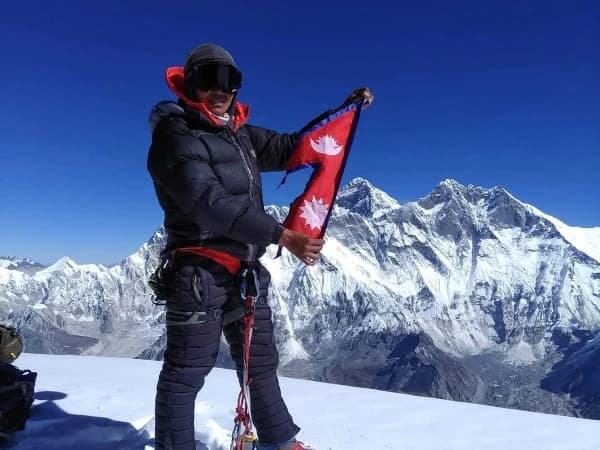
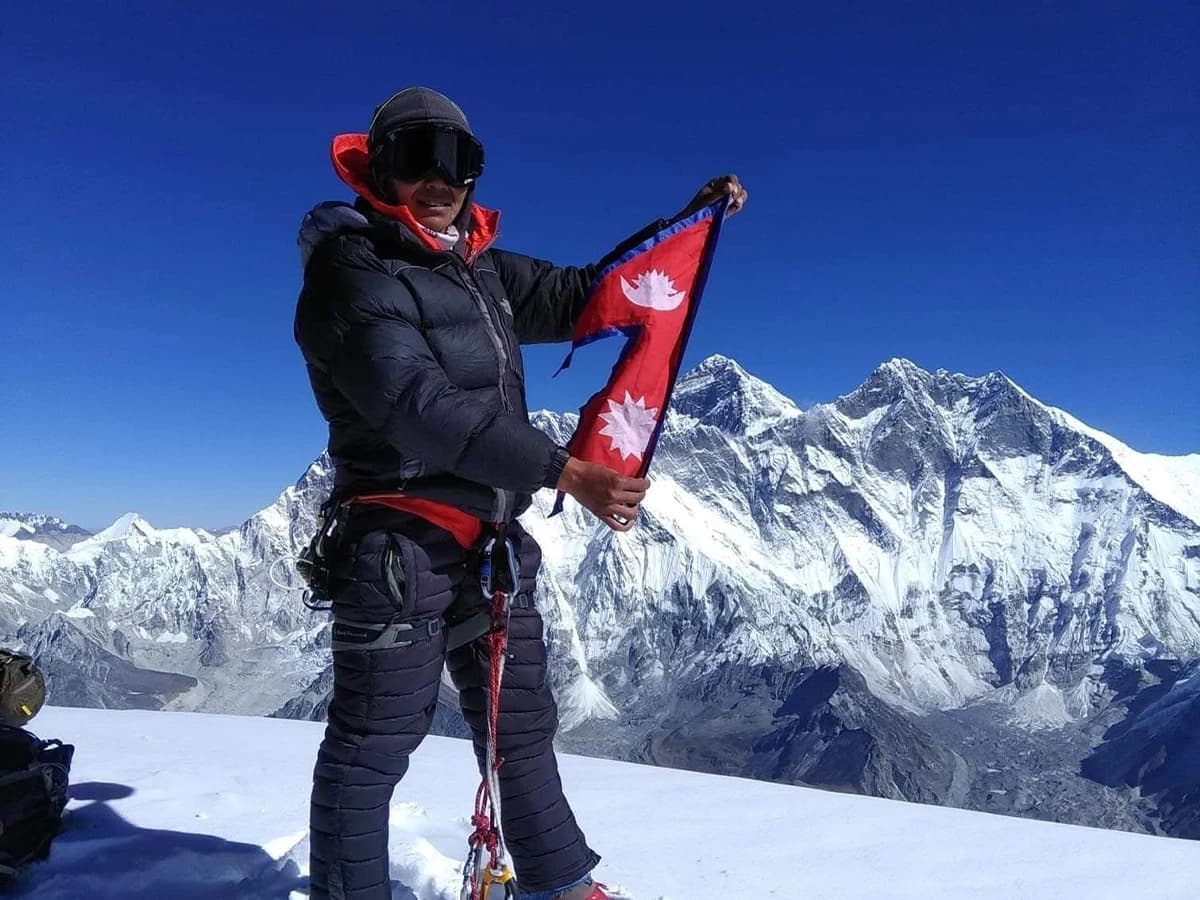
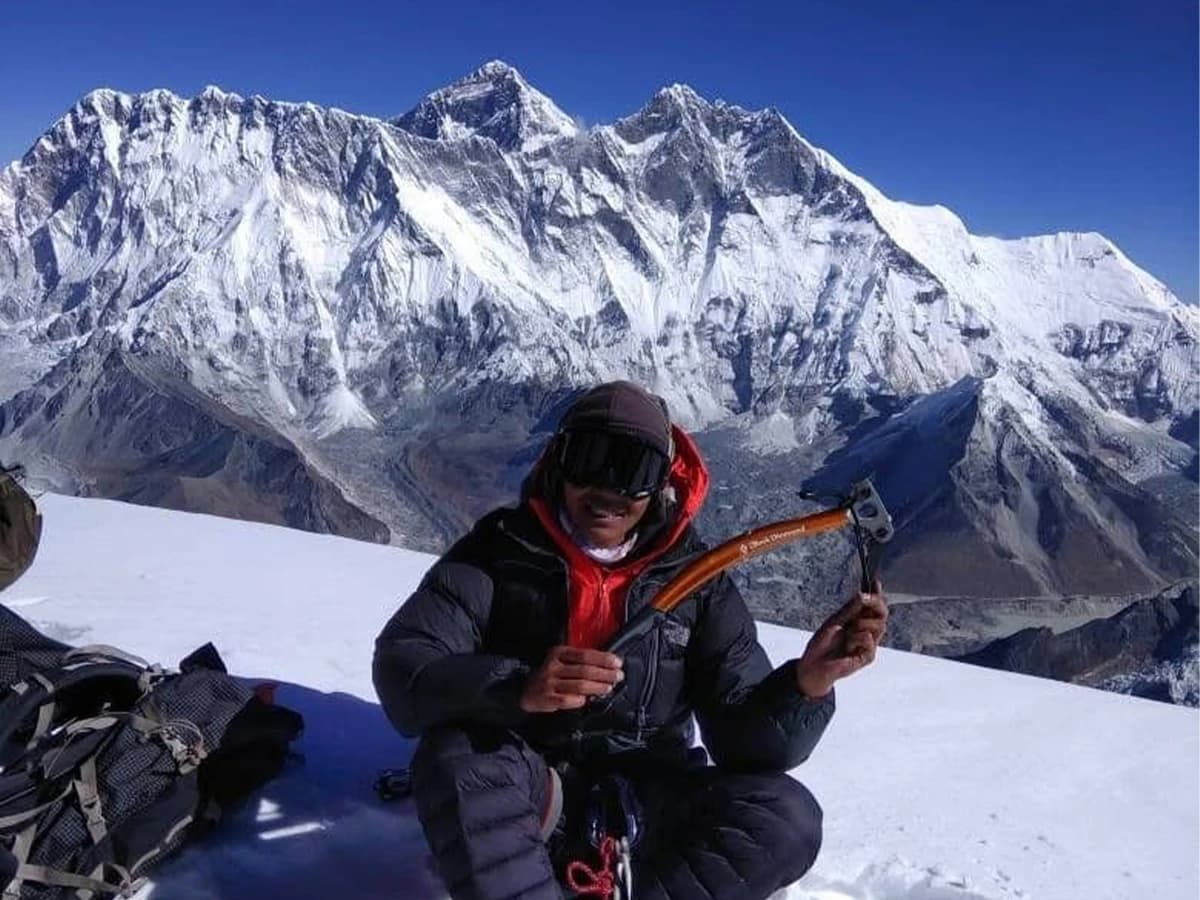
After about 3 more hours of challenging mixed climbing on an average 45-degree incline, you reach the summit of Lobuche East (6,119m / 20,075ft). From the top, you are rewarded with breathtaking panoramic views of Everest, Lhotse, Nuptse, Cholatse, Ama Dablam, Pumori, and other peaks in the region.

After spending quality time at the summit, you descend to Lobuche High Camp for lunch, then continue down to Thugla for the night.

Max Altitude: 3,985m Meals: Breakfast, Lunch, & DinnerAccommodation: Hotel 🏩

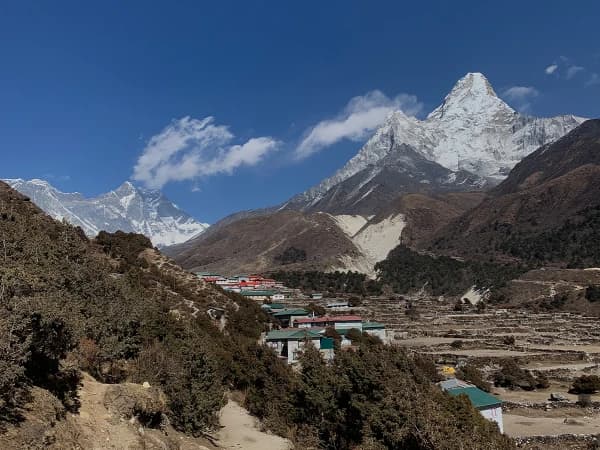
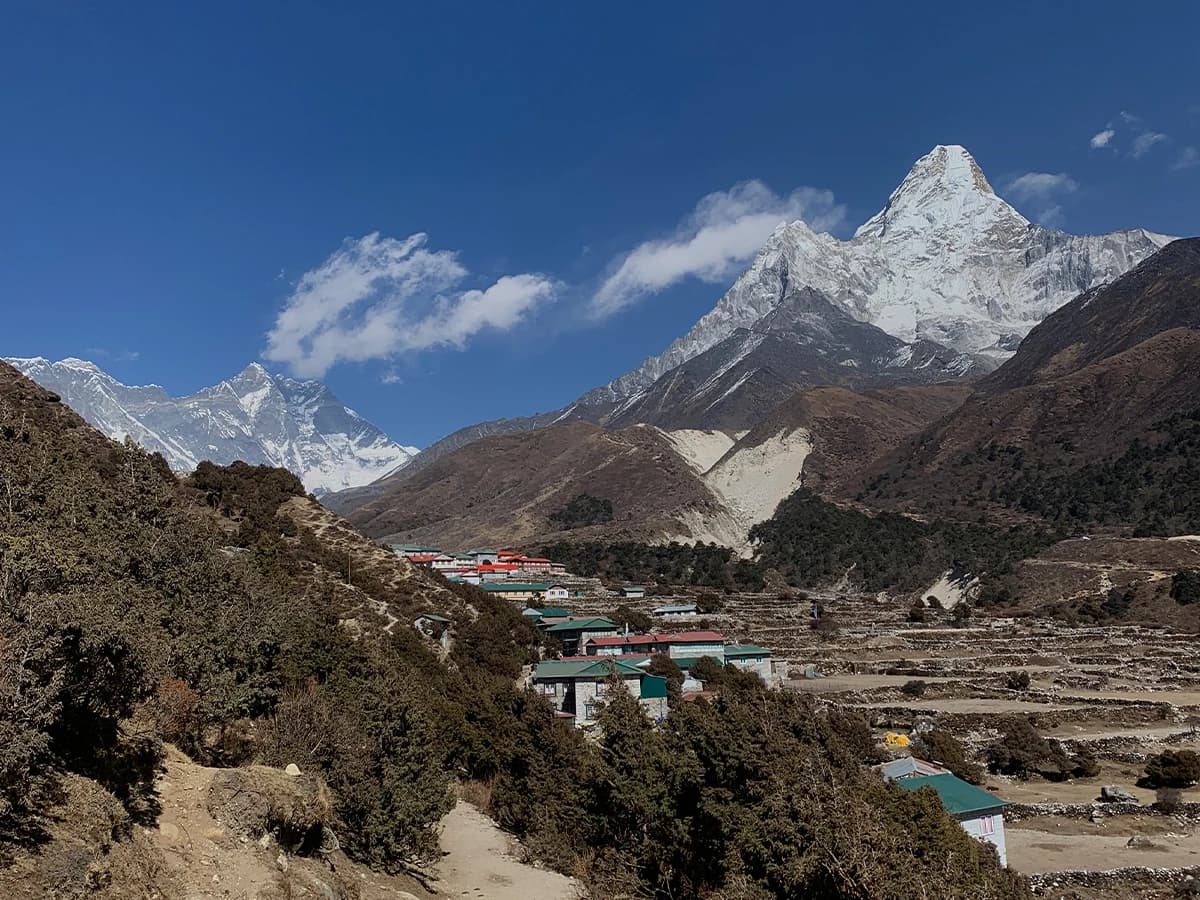
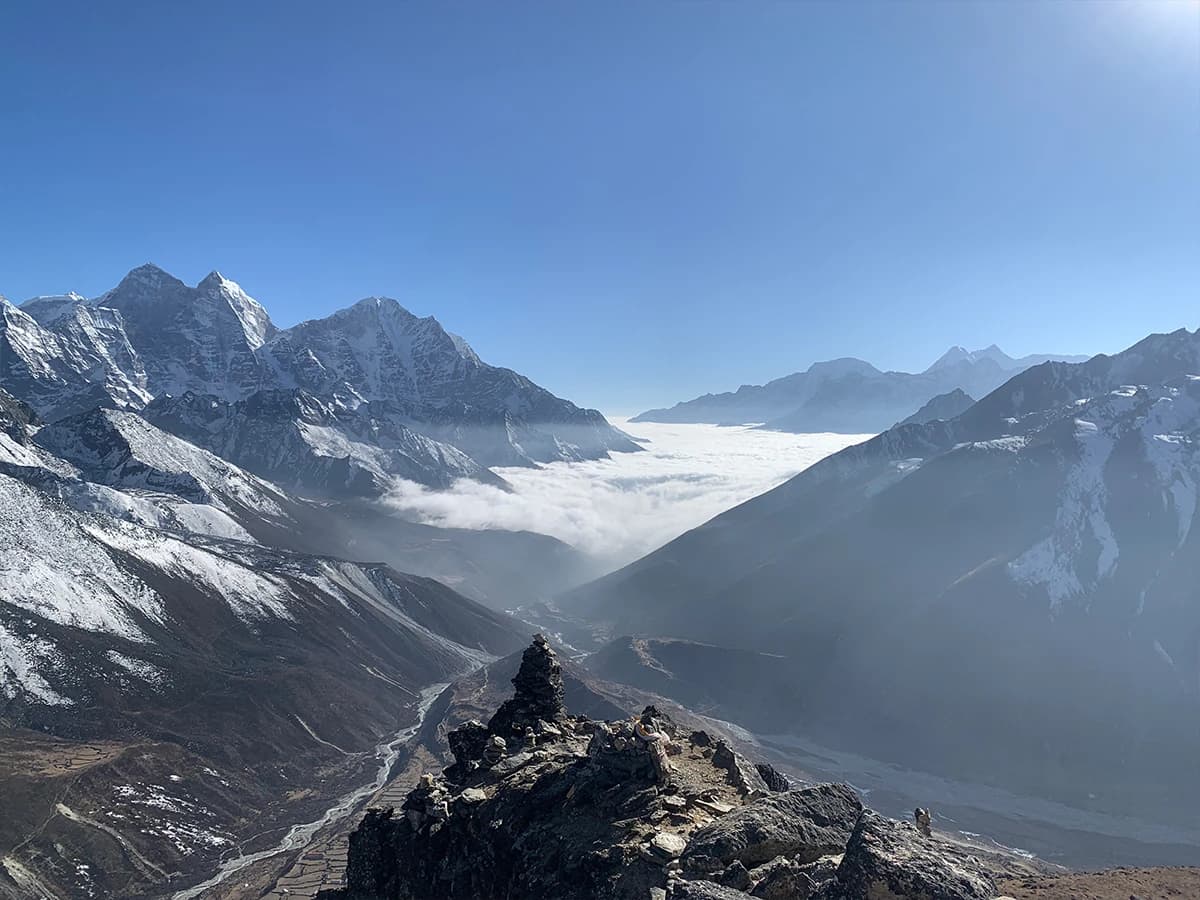
You retrace yours route through the wide valley of the Khumbu River, passing charming Sherpa settlements such as Orsho and Shomare before reaching Pangboche. This village is renowned for housing the oldest monastery in the Khumbu region. From Pangboche, you can enjoy stunning views of Everest, Ama Dablam, Thamserku, Kangtega, and the Kongde ridges, along with the scenic Imja Tse River.

Max Altitude: 4,600m Meals: Breakfast, Lunch, & DinnerAccommodation: Tent 🎪

Leaving Pangboche, you trek toward Ama Dablam Base Camp along a scenic trail that descends to the river before making a sharp ascent to Kharka. The route offers close-up views of Ama Dablam, Lhotse, Lobuche, Pumori, Cholatse, Kusum Kangaru, Thamserku, Amphu Gyabjen, and other majestic peaks. As you approach the base camp, Ama Dablam’s towering presence becomes even more striking. Upon arrival, you are greeted by breathtaking views of surrounding peaks and hanging glaciers and meet the rest of your expedition crew at Base Camp.

Max Altitude: 4,600m Meals: Breakfast, Lunch, & DinnerAccommodation: Tent 🎪

You spend two days at Ama Dablam Base Camp to rest, organize your gear, and acclimatize. During this time, we perform a traditional Sherpa Puja ceremony to seek blessings for a safe and successful climb. We also conduct climbing clinics, focusing on essential skills, safety techniques, and familiarization with your expedition equipment in preparation for the summit push.

Max Altitude: 5,600m Meals: Breakfast, Lunch, & DinnerAccommodation: Tent 🎪

After final gear checks and packing, you begin your summit push with a climb from Ama Dablam Base Camp to Camp 1. The route takes you along grassy ridges, heading east toward a broad saddle that offers views of Mingbo La Pass. The trail gradually ascends over grassy slopes before becoming steeper and more rugged, passing boulder fields and exposed sections. Camp 1 is perched on a narrow shelf, offering dramatic views of the surrounding peaks. The climb typically takes around 6 hours, depending on pace and conditions. You spend the night at Camp 1.

Max Altitude: 5,900m Meals: Breakfast, Lunch, & DinnerAccommodation: Tent 🎪

From Camp 1, the route becomes steeper and more technical. You follow fixed lines along exposed rock ridges and navigate several traverses, requiring careful footwork and the use of jumars. The climb includes classic alpine rock sections, most notably the Yellow Tower, one of the route’s iconic challenges. Camp 2 is situated just below the Grey Tower on a narrow ledge. Although it’s a relatively short day—around 4 hours—the climb is demanding, and you aim to reach Camp 2 by early afternoon to rest, hydrate, and prepare for the summit push later that night.

Max Altitude: 5,900m/6,812m Meals: Breakfast, Lunch, & DinnerAccommodation: Tent 🎪

Today you begins the summit push! The route above Camp 2 is the most technical and challenging section of the climb, featuring steep ice slopes, snow ridges, and mixed climbing sections. You start with a short traverse before ascending the icy face to the right of the Dablam (the hanging glacier).

The route continues through a crevasse-laced section, leading to a narrow snowfield below the Bergschrund. After carefully crossing it, you reach the upper glacier and ascend a sharp ice crest that takes you directly to the summit ridge.

The final stretch is steep and exposed but incredibly rewarding. At the summit, you are treated to breathtaking panoramic views of Everest, Lhotse, Makalu, Cho Oyu, and surrounding peaks—one of the most spectacular vistas in the Himalayas.

After a brief stay at the summit, you begin your descent, retracing the technical route past Mushroom Ridge and carefully making your way back to Camp 2 for rest. The total round trip typically takes 12–14 hours, depending on conditions, pace, and traffic.

Max Altitude: 4,600m Meals: Breakfast, Lunch, & DinnerAccommodation: Tent 🎪

You begin yours final descent from Camp 2 back to Ama Dablam Base Camp, retracing the route through the rugged ridges and alpine terrain. The day allows you to relax, reflect on the climb, and enjoy the stunning mountain scenery one last time before returning to Base Camp.

Meals: Breakfast, Lunch, & DinnerAccommodation: Tent 🎪

These day are reserved for weather delays, additional acclimatization, or rest as needed to ensure the best chance of a safe and successful summit.

Max Altitude: 3,440m Meals: Breakfast, Lunch, & DinnerAccommodation: Hotel 🏩

You begin yours return trek following the trail along the Imja River, passing through forests of birch and spruce before reaching Tengboche village for a brief stop. Continuing through blooming rhododendron forests, you cross a bridge over the Dudh Koshi River and make your way through the Dudh Koshi gorge and pine forests. The trail then leads us past Sansa village before arriving back at Namche Bazaar.

Max Altitude: 2,800m Meals: Breakfast, Lunch & DinnerAccommodation: Hotel 🏩

Today is your final day of trekking as you follow the Dudh Kosi River down to Lukla. After the steep descent from Namche Bazaar, the trail is mostly gradual, allowing for an easy pace. You stop for lunch along the way before making the final climb up to the Lukla airstrip.

The rest of the day is free to relax, soak in the warm sun, and reflect on the unforgettable experiences of your climb. In the evening, you celebrate the successful completion of your expedition with your Sherpa guides and porters, who have become not just teammates but good friends. This marks the conclusion of your journey in these magnificent mountains.

Max Altitude: 1,337m Meals: BreakfastAccommodation: Hotel 🏩

You wake up early, enjoy breakfast, and prepare for your flight back to Kathmandu. Upon landing at Tribhuvan International Airport, our office representatives will meet us and transfer you to the hotel. The rest of the day is free for you to relax, explore, or enjoy Kathmandu at your leisure.

Max Altitude: 1,337m Meals: BreakfastAccommodation: Hotel 🏩

Today is a free day in Kathmandu to relax, explore the city, or enjoy some last-minute shopping. This day also serves as a contingency in case of any delays with the Lukla flights.

Meals: Breakfast

Thank you for joining us on this expedition. It has been a pleasure sharing this adventure with you. You will be transferred to the airport according to your international flight schedule for your onward journey.

Ama Dablam & Lobuche Expedition Cost Details

Includes

Fully Supported & Guided Expedition

  • Fully guided expedition to Ama Dablam and Lobuche Peak
  • 1:1 Sherpa guide to climber ratio on Ama Dablam summit push
  • 1:3 Sherpa guide to climber ratio on Lobuche Peak

Experienced Lead Guide

  • Professional lead guide with previous Ama Dablam expedition experience
  • IFMGA guide provided for groups of 4 or more climbers
  • Lead guide supervises the entire approach; additional Sherpa guides assigned depending on group size

Oxygen

  • Supplementary oxygen available for emergency use only

Expedition Permits & Fees

  • Ama Dablam climbing royalty fee (USD 1000 per climber)
  • Lobuche Peak climbing permit
  • Trekking permit
  • Local entry permits

Other Official Charges

  • Rope fixing charges for each climber
  • Garbage management deposit/handling
  • Liaison officer wages and allowances

Acclimatization Climb (6000m Peak)

  • Lobuche Peak ascent included for acclimatization
  • Guide support on Lobuche Peak (1:3 guide-to-client ratio)

All meals and accommodation for the Lobuche Peak climb

  • Meals
  • All meals (Breakfast, Lunch, Dinner) with tea/coffee during the trek in teahouses/lodges
  • Freshly prepared meals (B, L, D) at Ama Dablam Base Camp cooked by our chef and kitchen team
  • Wide variety of nutritious high-altitude food for Camps 1, 2, and 3

Accommodation

  • Four nights hotel accommodation in Kathmandu with breakfast
  • Lodge/teahouse accommodation during the trekking period
  • Personal box tent at Ama Dablam Base Camp
  • High-quality mountain tents at higher camps (shared)

Fully Established Base Camp

  • Kitchen tent, dining tent, toilet tent, shower tent, and sleeping tents
  • Tables, chairs, heaters, and all necessary camp equipment
  • Generator and solar panels for charging devices

Higher Camps

  • High-quality tents
  • Stoves, fuel, and cooking equipment

Communication

  • Satellite phone for emergency communication (nominal fees apply for personal use)
  • Radio sets / walkie-talkies for inter-camp communication

Flights

  • Kathmandu/Ramechhap – Lukla flight
  • Lukla – Kathmandu/Ramechhap return flight

Staff & Support Team

  • Base Camp kitchen team: cook, helpers, and support staff
  • Wages, allowances, equipment, and insurance for all staff

Gear & Equipment

  • Group climbing equipment (ropes, anchors, etc.)
  • Two waterproof duffel bags per climber

Porterage

  • 45 kg equipment porterage per climber to Base Camp
  • 30 kg porterage per climber on return after the expedition

Transfers

  • All airport pickups and drops as per flight schedule
  • Weather Forecasting
  • Professional weather forecast updates throughout the expedition

Climbing Clinic

  • Pre-climb skills refresher and training sessions at Base Camp

Emergency Medical & Rescue Support

  • Comprehensive medical kit at Base Camp
  • Assistance with rescue coordination in case of emergency

(Personal travel insurance with helicopter evacuation is mandatory)

Climbing Certificate

  • Official Ama Dablam summit certificate from the Department of Tourism, Nepal
  • Courier service included

Excludes

  • International airfare
  • Meals in Kathmandu
  • Customs charges for bringing personal expedition equipment
  • Nepal entry visa fee
  • Personal clothing and climbing gear
  • Personal insurance (mandatory)
  • Summit bonus for Sherpa guide (USD 500)
  • Tips for Base Camp staff (USD 200 total)
  • Personal expenses

Dates & Availability

Oct 2026
Departure Date
Price
Trip Status
Departure Date
30 DaysOct 20, 2026 - Nov 18, 2026
Price
US$7499
Trip Status
Available
20 % Deposit

We offer flexible travel experiences through two distinct options: Group Departures and Private Trips.

🤝 Group Departures

How to Book: Click the Dates & Prices tab to view available dates, current availability, and pricing.

Pricing Note: Trip prices are dynamic and may fluctuate (increase or decrease) based on availability and market demand.

Guarantee: All group departures are guaranteed to run once your booking is officially confirmed.

Exclusive Private Trips

Click on book now option and fill up the provided details or you can directly send email to our offical mail address to know more information about private trips with friends, family, or colleagues who prefer a personalized journey. Work will work with you to tailor the trip to your preferred dates and accommodate any special requests you may have.

🚶 Important Note for Solo Travelers

Please be aware that some trips (details are in the Group Size section) require a minimum of two participants to officially confirm the departure.

Action for Solo Bookings: If you are booking as a solo participant for these specific trips, you must contact us before making your booking to confirm availability.

Essential Information

Ama Dablam & Lobuche Expedition Difficulty

The difficulties of climbing Ama Dablam (6,812m / 22,349ft) and Lobuche East (6,119m / 20,075ft) are dramatically different, making them suitable for climbers with distinct levels of experience. Lobuche East is a highly popular "trekking peak" often used for acclimatization before Everest Base Camp, while Ama Dablam is a full-fledged, highly technical expedition peak.

Here is a comparison of their difficulties:

1. Technical Difficulty

Feature:- Lobuche East (6,119m)- Ama Dablam (6,812m)

Alpine Grade:- PD+ (Peu Difficile+)-TD (Très Difficile)

Overall Technicality:- Moderate, Requires proficiency in basic mountaineering skills.- Extremely Technical. Requires advanced mixed climbing experience (rock, ice, and snow).

Route Highlights:- Steep Headwall/Summit Ridge. - The final ascent is a steep ridge of snow/ice (up to 45–60°).- The Yellow Tower & The Grey Tower. Near-vertical rock and ice sections demanding proper rock climbing technique at altitude. Mushroom Ridge. Highly exposed, narrow, knife-edge snow/ice ridge.

Rope Work:- Fixed ropes are usually placed on the final steep section of the summit ridge. Climbers must know how to use an ascender (jumar) and rappel.- Fixed ropes are used extensively and are often mandatory for the entire duration of the climb from Camp I to the summit due to the terrain's extreme exposure.

Prior Experience:- Basic high-altitude trekking experience and proficiency with crampons, ice axe, and ropes is sufficient.- Requires a strong climbing resume, including successful ascents of multiple semi-technical 6,000m peaks and advanced rock/ice climbing proficiency.

Summary:-  Ama Dablam is one of the most technical and exposed mountains below 8,000 meters and is often used as a test for 8,000m expeditions. Lobuche East is an excellent stepping stone for high-altitude climbing.

2. Altitude and Exposure

Feature:- Lobuche East (6,119m) - Ama Dablam (6,812m)

Summit Altitude:- Approx 600m lower than Ama Dablam.- Significantly Higher. Requires more dedicated acclimatization.

Exposure:- Moderate exposure on the final summit ridge.- Extreme Exposure. The entire route above Base Camp involves traversing narrow, steep, and highly exposed ridges with massive drop-offs.

Camps:- Typically one Base Camp and one High Camp.- Typically one Base Camp (BC) and two or three High Camps (C1, C2, C3).

Risk of Seracs/Icefall:- Low to moderate.- High. The route passes beneath the conspicuous Dablam (the hanging glacier/serac) between Camp II and Camp III, which poses a serious objective hazard from falling ice.

Summary:- The 693m difference in altitude is significant, but the much greater exposure and objective hazards on Ama Dablam dramatically increase its difficulty and danger.

3. Conclusion: Which is Right for You?

Choose Lobuche East if:

  • You are an experienced trekker transitioning to mountaineering.
  • You have basic mountaineering skills (crampons, ice axe, jumar, rope work).
  • You are looking for a highly rewarding climb with spectacular Everest region views without the commitment of an advanced technical expedition.

Choose Ama Dablam if:

  • You are a highly experienced alpine climber with rock, ice, and mixed climbing proficiency.
  • You have successfully summited multiple 6,000m to 7,000m peaks and are comfortable with extreme exposure.
  • You are seeking a world-class, technically demanding Himalayan objective.
  • If you are considering Ama Dablam, an ascent of Lobuche East is often included in the itinerary as an ideal way to acclimatize and practice skills before tackling the more difficult main peak.

Altitude Sickness

The Himlung Himal is non-technical peak but requires basic mountaineering skills with good physical fitness, which is situated at an altitude of 7,126 meters. So of course there is a high chance of getting altitude sickness symptoms due to high elevation. However, be prepared to keep your body healthy fit, and fine preparing and taking training. Do regular exercise related to cardiovascular, increase your walking levels, and boost your strength as well as run every day carrying a 10 kg bag drink plenty of water energy bars, and eat meals and seasonal fruits on time to keep your body healthy, and fresh as well as take outdoor training for the peak climbing such as natural rock climbing, artificial wall climbing, and mountaineering or climbing courses. If you have done these all and have previous experience of trekking and climbing then it helps you to complete Mount Himlung. As a trekker, you obviously have to know knowledge about altitude sickness symptoms and their prevention while trekking, traveling, peak climbing, and expedition so, here we have mentioned the altitude sickness symptoms and prevention methods below they are as follows:-

AMS (Acute Mountain Sickness) Symptoms

  • Vomiting, headache, fatigue/malaise, nausea, difficulty in breathing, dizziness, insomnia, loss of appetite, etc.

HACE (High Altitude Cerebral Edema) Symptoms

  • Several headaches, Weakness, loss of coordination, slurred speech, disorientation, memory loss, hallucinations (altered mental status) loss of consciousness, seizure, etc.

HAPE (High Altitude Pulmonary Edema) Symptoms

  • Dry cough, chest tightness or pain, cough, dyspnea at rest, decreased exercise tolerance, pink frothy, shortness of breath, etc.

Preventive Measures

  • Stay hydrated, ascend slowly, maintain your pace, listen to your body, get abundant rest, drink plenty of water using water purification tablets, eat carbohydrate-rich food, and do not drink alcohol or smoke while ascending and descent as soon as possible if the condition is worst.

Best Seasons for Climbing

The best seasons for climbing Ama Dablam are Autumn (Post-Monsoon) and Spring (Pre-Monsoon).

Autumn (September to November)

Autumn is generally considered the best and most preferred time for Ama Dablam.

  • Best Months: October and November are optimal.
  • Weather: Characterized by clear skies, low precipitation, and stable weather patterns following the monsoon. This leads to excellent visibility and stunning mountain views.
  • Conditions: The trails are typically drier. The air is crisp and clean.
  • Crowds: This is the most popular season, so expect more climbers and trekkers, especially in October.

Spring (March to May)

Spring is the second major climbing window and also offers good conditions.

  • Best Months: Mid-April to mid-May are the prime weeks.
  • Weather: Temperatures begin to warm up, but weather can be slightly more volatile than in autumn, with a possibility of more snow/snowstorms, especially in early spring.
  • Conditions: The lower trails are often lined with blooming rhododendrons, and there is generally more snow and ice on the mountain, which can make the ascent more challenging.
  • Crowds: The spring season often sees fewer climbers on Ama Dablam compared to autumn, as many focus on Everest and Lhotse, offering a more serene experience.

Other Seasons (Off-Peak)

  • Winter (December to February): Climbing is much more challenging due to extreme cold, high winds, heavy snowfall, and shorter daylight hours. While permit fees may be lower, the conditions are significantly more difficult.
  • Summer/Monsoon (June to August): This season is generally avoided due to heavy rainfall, cloud cover, muddy and slippery trails, and higher risk of landslides at lower elevations.

If your primary goal is the highest chance of stable weather and clear visibility, October/November (autumn) is your best bet. If you prefer fewer crowds and don't mind potentially more volatile weather and snowier conditions, April/May (spring) is a great alternative.

Required Experience

  • Climbers attempting Ama Dablam & Lobuche Expedition should have experiences:-
  • Excellent physical fitness and high endurance.
  • Prior high-altitude mountaineering experience on 6,000 meters + Peaks (such as Lobuche East Peak and Mera Peak or similar).
  • Familiarity with basic mountaineering skills like glacier travel, crevasse rescue, and the use of fixed ropes, crampons, and ice axes.

Permits for Ama Dablam & Lobuche Expedition

  • Mount Ama Dablam & Lobuche Expedition permit from MocTa (Ministry of Culture Tourism and Civil Aviation & NMA).
  • TIMS card (trekker’s information management system).
  • Sagarmatha National Park entry permit (SNP).
  • Khumbu Pasang Lhamu Rural Municipality permit.

Travel and Expedition Insurance

In the Ama Dablam & Lobuche Expedition, specialized travel and trekking insurances are crucial because of the high-altitude risks and potential for emergency Evacuation. It’s recommended to choose a policy that specifically covers high-altitude trekking risks, including helicopter rescue, medical expenses, and coverage lost equipment and baggage, and trip cancellations. Most of the standard travel and trekking insurance policies may not offer adequate coverage for the altitude or activities involved in Ama Dablam & Lobuche Expedition.

Make sure that the trekking and peak climbing risks coverage insurance is not easy to do because some travel insurance covers their trekking and peak climbing risk with emergency evacuation though the helicopter, death, lost gears and baggage but some insurance does not want to do it so be aware about that and do or purchase insurance where covers all your risks.

Although as we all know that, a foreigner is not allowed to purchase insurance from a Nepali insurer. Point out that, for these facts and purchase and elaborates all the requirement details of your trekking and peak climbing risks at your origin place insurance company, which protect their interest in case of trip cancellation, helicopter evacuation, medical emergencies, other illnesses, lost luggage theft, disasters, death, and many more.

At last, note it clearly whether the travel insurance company helps to covers all term and conditions as we mentioned above or not. Check the policy of the insurance company which are allow and which are not allow be confirm before doing insurance of travel and trekking plus peak climbing. Below we have mentioned some of the travel and trekking insurance company they are as follows:-

For Worldwide

  • World Nomads
  • Generali
  • IM Global

For UK Citizens

  • British Mountaineering Council (BMC)
  • DogTag UK
  • Adventures Insurance
  • Campbell Irvine

For USA/Canada Citizens

  • Travel Guard
  • IM Global
  • TuGo
  • Ripcord

For Europe

  • Europe Assistance
  • IHI Bupa
  • AXA Insurance
  • TCS (for Switzerland and France)

For Australian/New Zealand Citizens

  • Cover-More Travel Insurance
  • Ripcord Rescue Travel Insurance
  • 1 Cover Travel Insurance

For Malaysia/Singapore Citizens

  • AIG Travel Insurance
  • AIA Berhad
  • Alpha Global Solutions

Remind that, above mentioned insurance company is impartial a reference which can deliver a policy that covers your medical expenses, emergency evacuation, travel risks protection, and any other unseen conditions like loss of luggage, deaths, theft, so on. Please do not forget to ask questions to you are insurance company about these issues before buying the policy. Some of insurance company policy does not meet with your criteria for the required insurance coverage as it only covers helicopter evacuation and does not consist of medical expenses or any other risks even if they use manpower such Sherpa there should not be gaps in searching and emergency medical evacuations in order to the term and conditions.

Accommodation & food during the Trek & Peak Climb

On this 30-day Ama Dablam & Lobuche Expedition, you will spend the night at a teahouse, lodges, and hotel. Lodges, teahouses, and hotels are well maintained with good quality services and luxury accommodations facilities with proper meals as per the tourist's requirements. Rooms are available as per the need such as single rooms with attached bathrooms, twin beds with attached bathrooms, and couple beds with attached bathrooms. Overall the Western-style toilets are facilities available for trekkers even if you want shared bathrooms that are also available in warm hospitality services which makes you feel like you are at home. Spend the night in lodges, teahouses, or hotels as per you’re choices. While trek carry all toiletries with you including toilet paper for you are personal healthcare.

Service in the Lodge, hotel & Teahouse: Services like hot showers, Wi-Fi, and charging are available at an extra cost which is not included in the packages.

Drinking Water: You can either buy boiled water in the lodges which will charge you extra cost and is too expensive so, make sure that if you do not want to buy water then you can use water purification tablets to filter it further to keep your body fit drinking plenty of water during the trek and peak climbing preparation time.

Snacks: Buy light snacks in Kathmandu for the trek. Pack nuts items, energy bars chocolates, and other things you love to eat during your trek journey and if you buy them on the way can be so expensive due to the transportation charges.

Need Help? Call Us+977 9849138788